
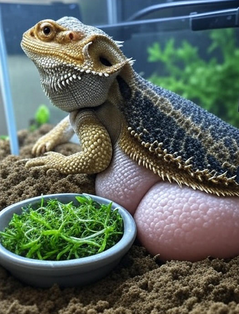
Caring for a gravid female bearded dragon is a journey filled with both joy and responsibility. These captivating reptiles, native to the arid regions of Australia, can become pregnant—whether through breeding or laying infertile eggs—a process that demands close attention from their owners. If you suspect signs your bearded dragon is pregnant, recognizing the indicators is crucial to supporting her health during this delicate phase. A gravid bearded dragon, carrying eggs, undergoes noticeable physical and behavioral shifts that signal her condition. This blog post dives deep into the signs of a gravid female bearded dragon, offering detailed insights to help you provide the best care. Whether she’s preparing to lay fertile eggs from a successful mating or infertile ones due to hormonal triggers, understanding these signs ensures she remains comfortable and healthy. We’ll explore key indicators, practical care tips, and essential products to guide you through this process. Let’s embark on this journey to keep your scaly companion thriving!
Why Recognizing a Gravid Female Matters
A gravid female bearded dragon is a reptile carrying eggs, a state that can occur after mating or spontaneously due to environmental or hormonal cues. This condition, while natural, places extra demands on her body, increasing the risk of health issues like egg binding (dystocia) or calcium depletion if not managed properly. In the wild, bearded dragons lay eggs in sandy burrows, benefiting from a diet rich in calcium and ample sunlight for vitamin D3 synthesis. In captivity, however, owners must replicate these conditions to prevent complications. Dr. Stephanie Nelk, a renowned reptile veterinarian, advises, “Identifying gravidity early allows owners to adjust care, ensuring the female’s safety and the viability of her eggs.” Early recognition helps you provide a nesting area, monitor her diet, and seek veterinary support if needed, safeguarding her well-being and potentially the next generation of dragons.
Gravid females may lay 15-30 eggs per clutch, depending on age, size, and health, with some producing multiple clutches in a season. This process can strain their calcium reserves, making supplementation critical. Whether the eggs are fertile (from a male) or infertile (unfertilized), the physical toll is similar, requiring attentive care. Misjudging her condition can lead to stress, reduced appetite, or serious conditions like MBD (Metabolic Bone Disease), which we cover in our Bearded Dragon Bone Disease Prevention guide. By staying vigilant, you can turn this natural event into a positive experience for both you and your pet.
Physical Signs of a Gravid Female Bearded Dragon
The body of a gravid female bearded dragon undergoes distinct changes as she prepares to lay eggs. Here are the primary physical signs to watch for:
- Swollen Abdomen: One of the most obvious signs is a noticeably rounded or distended belly. This swelling becomes evident a few weeks after mating or hormonal shifts, as eggs develop. The abdomen may feel firm to the touch, though you should avoid excessive handling to prevent stress.
- Weight Gain: A gravid female often gains weight due to the eggs, which can be felt as small, hard lumps along her sides if gently palpated (only by a vet or experienced handler). This weight increase is a key indicator, especially if paired with reduced activity.
- Changes in Skin Coloration: Some females exhibit darker or more vibrant skin tones, particularly around the belly, as a response to hormonal changes. This can vary by individual but is a subtle clue to watch for.
- Lethargy or Reduced Mobility: Carrying eggs can tire her out, leading to less movement or a preference for resting. This lethargy differs from illness—look for it alongside other signs rather than in isolation.
These physical cues typically appear 3-6 weeks after mating, though infertile egg-laying (a common occurrence in unbred females) may follow environmental triggers like longer daylight hours. If you notice these signs, prepare for egg-laying and consult our Bearded Dragon Egg Laying Signs for next steps. A vet visit can confirm gravidity via X-rays, ensuring you’re on the right track.
Behavioral Signs of a Gravid Female Bearded Dragon
Beyond physical changes, a gravid female’s behavior shifts as she nears egg-laying. These behavioral signs offer additional clues:
- Nesting Behavior: She may dig frantically in her tank, searching for a spot to lay eggs. This instinctual drive can lead to scratching at substrate or glass, signaling the need for a lay box. Provide a container with moist soil or sand—details in our Nesting Area Bearded Dragon Eggs guide.
- Increased Restlessness: Restlessness or pacing might emerge as she seeks a suitable nesting site. This can escalate if no lay box is available, causing stress—address it with a REPTI ZOO Full Glass 35 Gallon Reptile Tank* setup.
- Reduced Appetite: As egg-laying nears, some females eat less, conserving energy for the process. This is normal but monitor to avoid prolonged refusal—see our Bearded Dragon Won’t Eat Causes Solutions.
- Aggression or Irritability: Hormonal changes can make her defensive, especially if disturbed. Handle minimally and use Exo Terra Feeding Tongs* for safe feeding to reduce stress.
These behaviors peak 1-2 weeks before laying, offering a window to prepare. If digging persists without egg-laying, it could indicate egg binding—a vet emergency. Our Common Bearded Dragon Emergencies guide covers this risk.
The Egg-Laying Process: What to Expect
Once gravid, a female bearded dragon’s egg-laying process follows a predictable timeline. After mating (or hormonal triggers), eggs develop over 4-6 weeks. As laying nears, she’ll seek a nesting site, often laying 15-30 eggs in one or more clutches. Infertile eggs, common in unbred females, look similar but won’t hatch. The process can take hours, with her digging, laying, and covering the eggs.
Post-laying, she may appear exhausted or lose weight, needing extra care. Provide a Fluker’s Reptile Calcium Supplement Without Vitamin D3* to replenish calcium lost during egg production, and ensure Arcadia Pro T5 UVB Lighting Kit – 24W – Dragon* supports recovery. Monitor her for 1-2 weeks—our Care for Bearded Dragon Hatchlings First Month offers post-laying tips. If she struggles to lay, seek a vet to prevent egg binding, detailed in our Bearded Dragon Injured Care.
Health Risks During Gravidity
Gravid females face specific health risks that require vigilance:
- Egg Binding (Dystocia): If eggs don’t pass, it can cause blockages, pain, or infection. Signs include straining without laying or a hard abdomen—urgent vet care is needed.
- Calcium Depletion: Egg production drains calcium, risking MBD. Dust food with Fluker’s Reptile Calcium Supplement Without Vitamin D3* and use HERPTIVITE Multivitamin for Reptiles and Amphibians* to offset this.
- Stress: Poor conditions or handling can stress her, delaying laying. A Reptile Tank Thermometer, PAIZOO LED Digital Reptile Thermometer and Humidity Gauge* keeps humidity (30-40%) and temps (95-110°F basking) stable.
- Infection: Unlaid eggs can lead to bacterial growth—watch for lethargy or discharge and consult our Respiratory Infections Bearded Dragons.
Regular vet checks, as outlined in our Bearded Dragon Vet Visit Frequency, can catch these early. A healthy gravid female is less prone to complications.
Preparing for Egg-Laying: Essential Care Tips
Supporting a gravid female requires proactive steps to ensure a smooth egg-laying process:
- Provide a Lay Box: Offer a plastic container with 6-8 inches of moist soil or sand. Place it in a quiet tank corner—our Bearded Dragon Enclosure Designs has setup ideas.
- Increase Calcium Intake: Dust all food with Fluker’s Reptile Calcium Supplement Without Vitamin D3* daily, especially pre- and post-laying, to support egg shell formation.
- Maintain Optimal Lighting: Use Arcadia Pro T5 UVB Lighting Kit – 24W – Dragon* for 12-14 hours daily to boost vitamin D3, aiding calcium absorption—see our Importance of UVB Lighting for Bearded Dragons.
- Monitor Temperature: Keep the basking spot at 95-110°F with a Reptile Tank Thermometer, PAIZOO LED Digital Reptile Thermometer and Humidity Gauge* to support her metabolism.
- Reduce Handling: Limit interaction to avoid stress, using Exo Terra Feeding Tongs* for feeding to minimize disturbance.
Post-laying, offer a nutrient boost with HERPTIVITE Multivitamin for Reptiles and Amphibians* to aid recovery. A Bearded Dragon Care Checklist can track these tasks.
Diet Adjustments for a Gravid Female
A gravid female’s diet needs tweaking to meet increased demands. Focus on calcium-rich foods like collard greens, mustard greens, and calcium-dusted insects (e.g., dubia roaches or phoenix worms). Reduce high-fat treats like wax worms—our Can a Bearded Dragon Eat Wax Worms explains why. Offer smaller, frequent meals to avoid overloading her system, using a Exo Terra Feeding Dish* for easy access. Hydration is vital—provide a shallow water dish and soak her 2-3 times weekly to prevent dehydration, detailed in our How to Spot Early Signs of Dehydration in Bearded Dragons. A balanced diet supports egg development and her strength.
After Egg-Laying: Recovery and Monitoring
After laying, your female needs time to recover. She may lose 10-20% of her body weight, appearing tired or thin. Offer a high-calcium diet with Fluker’s Reptile Calcium Supplement Without Vitamin D3* and monitor for 1-2 weeks. Watch for signs of distress like prolonged lethargy or refusal to eat—our Recognize Distress Bearded Dragons covers this. If fertile, incubate eggs at 82-85°F (see Ideal Temperature Bearded Dragon Eggs); if infertile, discard them safely. A vet check post-laying, as per Latest Advances in Bearded Dragon Veterinary Care, ensures her health.
Long-Term Care Considerations
Gravid females may lay multiple clutches, straining their body over time. Annual vet visits, detailed in Do Senior Bearded Dragons Need More Frequent Vet Visits, track calcium levels. Avoid breeding too young—our Risks Breeding Bearded Dragons Young warns of health risks. A spacious REPTI ZOO Full Glass 35 Gallon Reptile Tank* supports her needs long-term. Ethical breeding concerns are explored in Are There Ethical Concerns Breeding Bearded Dragon Morphs, guiding responsible ownership.
Conclusion
Recognizing the signs of a gravid female bearded dragon—swollen belly, nesting, or irritability—empowers you to support her through egg-laying. With a lay box, enhanced diet, optimal lighting, and minimal stress, you can ensure her health and comfort. Products like Fluker’s Reptile Calcium Supplement Without Vitamin D3* and Arcadia Pro T5 UVB Lighting Kit – 24W – Dragon* are vital allies. Share your gravid care experiences or questions in the comments—let’s build a community of informed dragon parents!
BeardedBuddies.com collaborates with reptile experts to provide accurate, trustworthy care advice. This site participates in the Amazon Associates Program, earning from qualifying purchases.
About the Author
Dragon King, founder of BeardedBuddies.com, here. With over seven years raising bearded dragons, my female Blaze showed nesting signs last year—adding a REPTI ZOO Full Glass 35 Gallon Reptile Tank* and Fluker’s Reptile Calcium Supplement Without Vitamin D3* kept her strong. I partner with herpetologists like Dr. Stephanie Nelk to deliver practical, vet-backed tips, helping owners worldwide. All advice stems from expert consultations and care standards.