
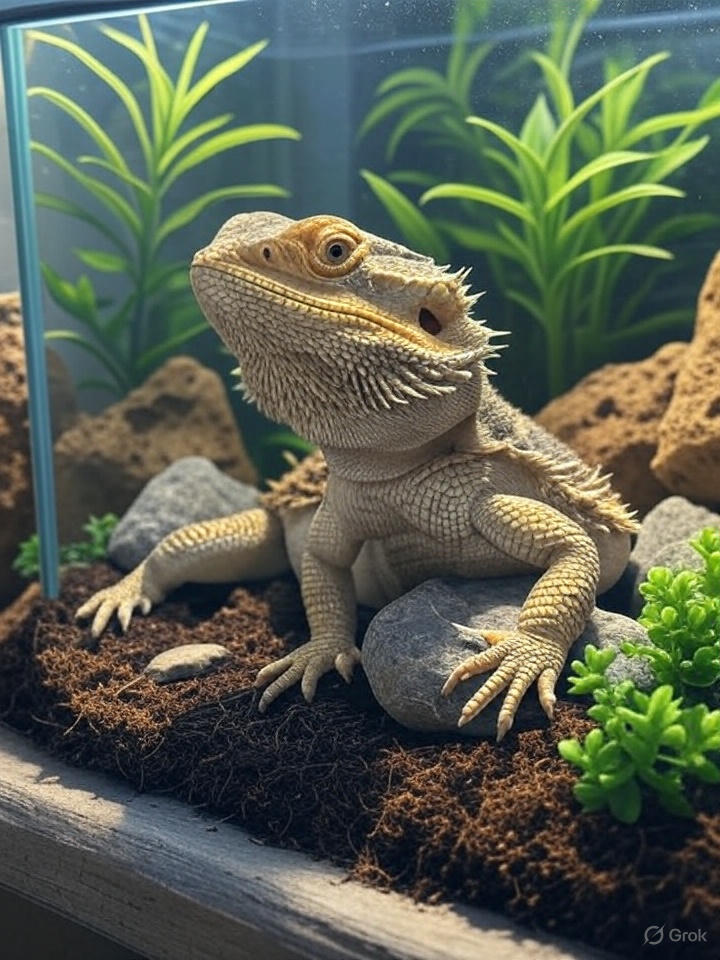
Dehydration is a common but preventable issue in bearded dragons that can lead to serious health problems if ignored. These desert-dwelling reptiles need proper hydration to thrive, especially in captivity. Spotting early signs of dehydration allows you to act quickly and keep your dragon healthy. This guide covers the symptoms, causes, and treatment of dehydration, with tips to ensure your pet stays hydrated. Let’s keep your dragon’s scales shining.
Why Dehydration Is a Concern
Bearded dragons get hydration from food, water, and their environment, but improper care can lead to dehydration. This stresses organs, weakens immunity, and increases risks like impaction. A proper setup with a Zoo Med ReptiSun UVB Bulb* supports overall health, aiding hydration. As an Amazon Associate, I earn from qualifying purchases. Early detection is key to preventing complications.
Early Signs of Dehydration
Watch for these symptoms:
- Sunken Eyes: Eyes appear recessed or dull, a classic dehydration sign.
- Wrinkled Skin: Skin looks loose or saggy, especially around the neck or sides.
- Lethargy: Reduced activity or slow responses to stimuli.
- Sticky Saliva: Mouth appears tacky or stringy when opened.
- Reduced Urination: Fewer or drier urates (white part of droppings).
Use a Pet Scale for Small Animal* to check for sudden weight loss, another dehydration clue.
Causes of Dehydration
| Cause | Details | Solution |
|---|---|---|
| Low Water Intake | Dragons rarely drink from bowls. | Offer water via syringe or mist greens in a Fluker’s Repta-Bowl*. |
| High Temperatures | Basking >100°F dries them out. | Monitor with Exo Terra Digital Thermometer*. |
| Low Humidity | <20% humidity causes skin drying. | Maintain 30-40% with a hygrometer. |
| Poor Diet | Low-moisture greens reduce hydration. | Feed high-water greens like collards. |
The Bearded Dragon Care Checklist helps track hydration factors. Owners swear by its tailored plans to prevent dehydration.
Treating Dehydration at Home
For mild dehydration, try these vet-approved steps:
- Offer Water: Use a dropper to gently drip water on their snout, encouraging licking.
- Soak in Lukewarm Water: Bathe for 10-15 minutes in 80-85°F water, 1-2 times daily.
- Increase Moist Foods: Offer water-rich greens like cucumber (sparingly) or collards in a Fluker’s Repta-Bowl*.
- Check Environment: Ensure proper UVB with a Zoo Med ReptiSun UVB Bulb* and temperatures with an Exo Terra Digital Thermometer*.
- Supplement: Dust food with Zoo Med Repti Calcium* to support health.
Consult a vet like Dr. Stephanie Nelk if symptoms persist beyond 2-3 days.
Preventing Dehydration
- Provide Fresh Water: Refill daily in a shallow dish.
- Mist Greens: Lightly spray greens to boost moisture intake.
- Monitor Environment: Keep humidity at 30-40% and temperatures in check.
- Regular Weigh-Ins: Use a Pet Scale for Small Animal* to catch weight loss early.
My dragon, Blaze, had sunken eyes until I started misting his greens daily.
Myths About Dehydration
- Myth: Dragons don’t need water if they eat greens.
Truth: Greens alone may not suffice; offer additional water. - Myth: Dehydration fixes itself.
Truth: It requires active intervention to prevent organ damage. - Myth: All dragons drink from bowls.
Truth: Many need syringe or misting assistance.
Conclusion: Keep Your Dragon Hydrated
Spotting early dehydration signs like sunken eyes or lethargy allows quick action with soaks, moist foods, and tools like the Bearded Dragon Care Checklist. Use Zoo Med ReptiSun UVB Bulb* and Exo Terra Digital Thermometer* for a healthy habitat. How do you hydrate your dragon? Share your tips in the comments—I’d love to hear your routine!
BeardedBuddies.com collaborates with reptile experts to provide accurate, trustworthy care advice. This site participates in the Amazon Associates Program, earning from qualifying purchases.
About the Author
Dragon King, founder of BeardedBuddies.com, has raised bearded dragons for over seven years. He caught Blaze’s dehydration early with regular checks. Working with experts like Dr. Stephanie Nelk, a reptile veterinarian, he shares hydration tips. All advice is based on consultations with herpetologists and standard reptile care practices.