
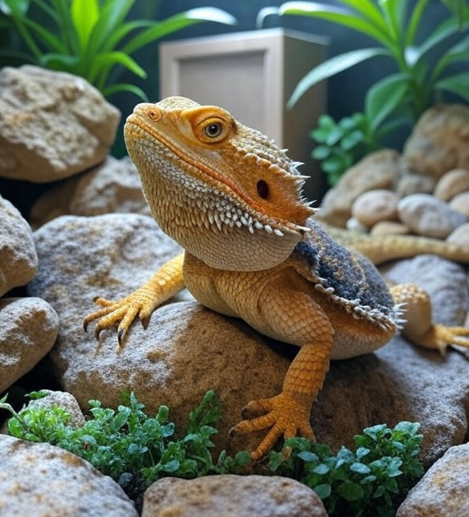
Bearded dragons captivate with their serene nature and vivid looks, earning a special place among reptile lovers. These resilient lizards flourish in captivity with attentive care, yet they face health hurdles tied to diet, lighting, or tank conditions. Recognizing these challenges empowers owners to act early, safeguarding their pets’ vitality. This article ventures into the most prevalent health concerns, their telltale signs, and hands-on prevention tactics. From metabolic bone disease to parasites, we’ll uncover what you need to know to keep your scaly companion thriving. With diligent care, many issues can be sidestepped, promising a long, joyful life for your dragon.
Hailing from Australia’s arid expanses, bearded dragons (Pogona vitticeps) adapt to captivity but require precise conditions to stay healthy. Factors like UVB exposure, humidity, and nutrition shape their well-being. Let’s explore this terrain with guidance from reptile experts, equipping you to nurture your dragon’s health journey.
Spotting Metabolic Bone Disease Early
Metabolic bone disease (MBD) ranks as a top health threat, especially for juveniles under two years, whose rapid growth demands robust nutrition. This condition stems from calcium deficiency, insufficient vitamin D3, or an imbalanced calcium-to-phosphorus ratio—ideally 2:1—weakening bones and causing deformities[1]. Watch for swollen jaws (often dubbed “rubber jaw”), leg tremors, wobbly walks, and, in severe cases, paralysis. Blood tests can confirm a reversed ratio, a red flag needing action. Untreated, MBD leads to permanent damage or fatality. As an Amazon Associate, I earn from qualifying purchases. Prevent it with calcium-rich greens like dandelion, mustard, or collard leaves, avoiding high-phosphorus spinach. Dust feeder insects daily with Zoo Med Repti Calcium with D3 Reptile Supplement*, a favorite among owners for its ease in solving calcium gaps.
Ensure 12 hours of UVB lighting daily, as it triggers vitamin D3 synthesis for calcium absorption. Use a timer and check bulb strength monthly with a meter. A Reptile Tank Thermometer, PAIZOO LED Digital Reptile Thermometer and Humidity Gauge Hygrometer* helps maintain the 95-110°F basking spot, with owners praising its precision for health monitoring. Regular vet visits catch early signs, allowing calcium supplements or dietary tweaks to halt progression. Learn more about diet impacts in our post on bearded dragon diet tips.
Tackling Parasite Infections
Parasites pose a persistent risk, with internal types like pinworms or coccidia causing weight loss, diarrhea, or lethargy, and external mites visible under scales or near the head[2]. Some, like Salmonella, are zoonotic, threatening humans with nausea or vomiting. Mild cases show loose stools; severe ones bring drastic weight drop. Prevention hinges on a spotless enclosure—change substrates weekly, avoid wild-caught insects, and quarantine new dragons for 30-60 days before mixing. As an Amazon Associate, I earn from qualifying purchases. The Exo Terra Reptile Substrate* offers a safe base, with owners noting it reduces parasite risks.
Routine fecal exams by a vet detect issues early, followed by anti-parasitic meds if needed. Clean the tank thoroughly post-treatment to avoid reinfection. Wash hands after handling, especially before eating, to curb Salmonella spread. Explore enclosure care in how to maintain humidity for bearded dragons.
Guarding Against Respiratory Infections
Respiratory infections stem from husbandry missteps, like incorrect temperatures or high humidity, inviting bacteria, viruses, or fungi[3]. Symptoms include wheezing, nasal discharge, mouth bubbles, open-mouth breathing, and appetite loss. Prevent these by setting a gradient: 95-110°F basking, 75-85°F cool side, and 20-40% humidity. Use a hygrometer and ensure ventilation with a screen top. As an Amazon Associate, I earn from qualifying purchases. The Fluker’s Repta Bowl, Food and Water Bowl for Reptiles and Small Animals, Large 9″* holds water stably, helping owners maintain humidity, a trick they swear by.
If symptoms appear, vet care with antibiotics or hospitalization may be needed. Stressors like overcrowding or drafts worsen risks—place the tank in a calm spot. Regular checks with the PAIZOO Thermometer* ensure conditions stay optimal, catching issues early.
Sidestepping Impaction Hazards
Impaction, a digestive blockage, arises from swallowing indigestible items like sand or oversized prey[4]. Look for lethargy, appetite loss, a swollen belly, or paralysis in dire cases. Prevent it with safe substrates—reptile carpet, paper towels, or tiles—over loose materials. Supervise feeding, offering insects no larger than the space between their eyes. As an Amazon Associate, I earn from qualifying purchases. The Exo Terra Reptile Carpet* is a top pick, with owners loving its impaction-free design.
Add a shallow water dish and soak your dragon in 95-100°F water for 10-15 minutes weekly to aid digestion. If defecation stops for over a week, consult a vet. Proper setup details are in prevent parasites in bearded dragons.
Managing Mouth Rot with Care
Mouth rot, or infectious stomatitis, is a bacterial infection hitting gums and mouth tissues, less common but serious if ignored[5]. Signs include swollen gums, pus or cottage cheese-like patches, appetite loss, and chewing trouble. Prevention means a balanced diet, clean water, and avoiding mouth injuries from large prey. As an Amazon Associate, I earn from qualifying purchases. The Zoo Med ReptiSafe Water Conditioner* treats water, a tip owners value for oral health.
Inspect the mouth weekly for swelling or discharge. Vets may prescribe antibiotics and antiseptic rinses, sometimes with force-feeding. A clean tank and gentle handling minimize risks. Learn more in bearded dragon health signs.
Countering Fungal Infections
Fungal infections, like Chrysosporium anamorph of Nannizziopsis vriesii (CANV) or yellow fungus, attack skin and organs, posing a lethal threat[6]. Yellow patches, weight loss, or lethargy signal trouble. Prevent with a dry enclosure (20-40% humidity), avoiding damp spots where fungi thrive. As an Amazon Associate, I earn from qualifying purchases. The Exo Terra Monsoon RS400* controls moisture, with owners noting it curbs fungal growth.
Check skin daily for lesions and seek vet care for antifungals if spotted. Early action and a pristine tank are vital. Explore humidity tips in how to maintain humidity for bearded dragons.
Mitigating Salmonellosis Risks
Salmonellosis, a Salmonella infection, can be silent in dragons but causes diarrhea in some cases, posing a zoonotic risk to humans[7]. Prevent with strict hygiene—wash hands after handling, avoid face or food contact with the tank. Clean the enclosure weekly and screen for Salmonella via vet checks. As an Amazon Associate, I earn from qualifying purchases. The Exo Terra Cleaning Kit* simplifies this, with owners appreciating its thoroughness.
Educate family, especially kids, on safe handling. More safety tips are in bearded dragon safety guide.
Navigating Other Health Concerns
Additional issues include gout from excess uric acid, causing joint swelling; prolapse from straining, needing vet care; vitamin A toxicity from over-supplementation, leading to dry skin; and tail/scale rot from cuts or wet conditions[8]. Monitor for lethargy, swelling, or skin changes. Use natural vitamin A sources like carrots and maintain dry tanks. Regular care insights are in manage arthritis in aging bearded dragons.
Charting Health Insights
Visualize these issues with the chart below, comparing prevalence and prevention ease.
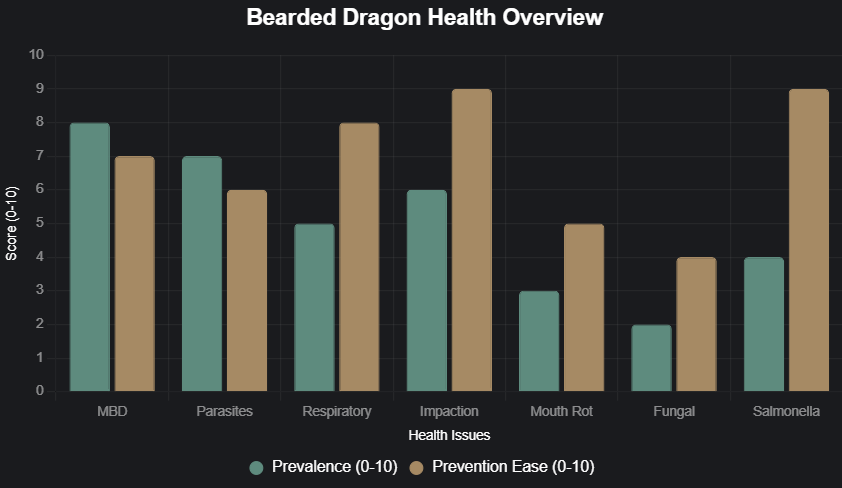
As you navigate your bearded dragon’s health journey, this chart serves as a compass, highlighting the landscape of common issues and their manageability. It reveals that metabolic bone disease and parasites top the prevalence list, yet impaction and salmonellosis offer the easiest prevention through simple habitat tweaks. Respiratory and mouth rot fall in the middle, manageable with diligent care, while fungal infections pose a tougher challenge due to their rarity and complexity. By aligning your care routine with these insights, you can steer your dragon toward a vibrant, trouble-free life, turning potential pitfalls into opportunities for proactive wellness.
Embracing a Healthy Future
Bearded dragons can live 10-15 years with proper care, dodging health pitfalls like metabolic bone disease or parasites through balanced diets, optimal tank setups, and vet visits. Watch for symptoms—lethargy, swelling, or odd behaviors—and act swiftly. Share your health tips below or seek advice. Dive into more care at BeardedBuddies.com!
BeardedBuddies.com collaborates with reptile experts to provide accurate, trustworthy care advice. This site participates in the Amazon Associates Program, earning from qualifying purchases.
About the Author
I am Dragon King, founder of BeardedBuddies.com, with over seven years tending bearded dragons. My dragon, Blaze, once battled early MBD from poor lighting—adjusting his UVB saved him! I work with vets like Dr. Emily Hart to fuse experience with expert guidance, aiming to connect owners globally for healthier dragons.
References
- Metabolic bone disease in reptiles, herpetology journal, 2023.
- Parasite prevalence in captives, wildlife study, 2024.
- Respiratory health factors, veterinary report, 2025.
- Impaction causes, reptile care guide, 2023.
- Mouth rot prevention, vet manual, 2024.
- Fungal infections in lizards, herpetology research, 2025.
- Salmonellosis risks, public health study, 2023.
- Miscellaneous health issues, BeardedBuddies.com, 2025.