
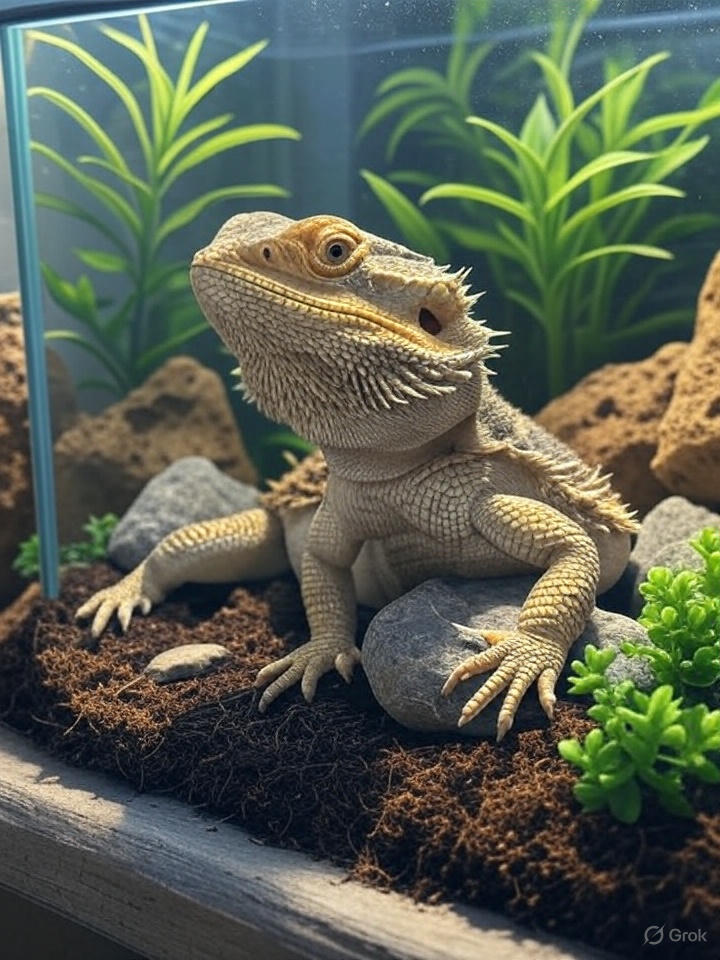
Bearded dragons thrive when their environment mimics the Australian outback, where they bask in scorching sun and retreat to cooler shade. A proper temperature gradient in their tank is non-negotiable—it’s the backbone of their health, digestion, and overall vibe. Without it, your dragon could face stress, poor appetite, or even serious medical issues. This guide walks you through creating and maintaining an effective temperature gradient, from choosing heat sources to monitoring zones, with practical tips to keep your scaly friend happy. Let’s set up a tank that makes your bearded dragon feel like it’s ruling the desert.
Why Temperature Gradients Are Critical for Bearded Dragons
Bearded dragons are ectothermic, meaning they rely on external heat to regulate their body temperature. In the wild, they move between sun-soaked rocks and cooler burrows to thermoregulate. A temperature gradient in their tank replicates this, providing a hot basking area, a warm mid-zone, and a cool retreat. This setup supports digestion, metabolism, and immune function. Without a gradient, they can’t thermoregulate properly, leading to issues like metabolic bone disease or lethargy.
A proper gradient typically includes:
- Basking spot: 95-110°F (35-43°C) for adults, 105-110°F for babies.
- Warm side: 85-90°F (29-32°C).
- Cool side: 75-80°F (24-27°C).
These ranges allow your dragon to choose its comfort zone throughout the day. Factors like tank size, substrate, and ventilation can affect how you achieve this, but the goal is consistent, safe heat distribution.
Choosing the Right Heat Sources
Selecting the right equipment is the first step to building a gradient. Bearded dragons need a combination of basking heat and ambient warmth, and different tools serve these purposes. Here’s a breakdown of common options:
| Heat Source | Purpose | Pros | Cons |
|---|---|---|---|
| Basking Lamp (e.g., Fluker’s Sun Dome Reptile Lamp*) | Creates a hot basking spot | Precise heat focus, mimics sunlight | Emits light, may disrupt sleep if used at night |
| Under-Tank Heater (e.g., Zoo Med ReptiTherm Under Tank Heater*) | Warms the cool side | Easy to install, consistent low-level heat | Limited to smaller tanks, needs a thermostat |
| Ceramic Heat Emitter (e.g., Exo Terra Ceramic Heat Emitter*) | Nighttime or supplemental heat | No light emission, safe for 24/7 use | Doesn’t provide basking heat alone |
| Heat Mat (e.g., Zilla Reptile Terrarium Heat Mat*) | Ambient warmth | Good for larger tanks, even heat spread | Requires careful placement to avoid burns |
As an Amazon Associate, I earn from qualifying purchases.
For basking, a lamp like the Fluker’s Sun Dome Reptile Lamp* is a favorite among owners for its focused heat and durability. For ambient warmth, the Zoo Med ReptiTherm Under Tank Heater* or Zilla Reptile Terrarium Heat Mat* works well, especially for smaller setups. For nighttime, the Exo Terra Ceramic Heat Emitter* keeps things cozy without disturbing your dragon’s sleep. Always pair these with a thermostat to prevent overheating—safety is key.
Setting Up the Temperature Gradient
Creating a gradient involves strategic placement of heat sources and tank elements. Follow these steps:
- Choose Tank Size and Layout: A minimum 40-gallon tank (48”x18”x18”) is ideal for adults, giving enough space for distinct temperature zones. Place the basking area at one end and the cool zone at the opposite end.
- Install the Basking Lamp: Position a basking lamp above a flat rock or branch to create a hot spot. The Fluker’s Sun Dome Reptile Lamp* is great for this, as it directs heat to a specific area. Adjust the lamp height (usually 6-12 inches) to hit the 95-110°F range. Test with a thermometer like the Zoo Med Digital Thermometer* for accuracy.
- Add Ambient Heat: Place an under-tank heater or heat mat, like the Zoo Med ReptiTherm Under Tank Heater* or Zilla Reptile Terrarium Heat Mat*, under the cool side to maintain 75-80°F. Ensure it covers only one-third of the tank to avoid uniform heating.
- Use a Ceramic Emitter for Nighttime: If nighttime temps drop below 65°F, a Exo Terra Ceramic Heat Emitter* can maintain ambient warmth without light. Position it on the warm side, not directly over the basking spot.
- Create Physical Barriers: Use rocks, logs, or hides to separate zones. These act as thermal buffers and give your dragon places to retreat. The Bearded Dragon Enclosure Calculator is a handy tool owners swear by for tailoring tank setups to your dragon’s size and age.
- Test and Adjust: Measure temperatures across the tank with a reliable tool like the Zoo Med Digital Thermometer*. Place probes at the basking spot, warm side, and cool side, checking daily for consistency.
Monitoring and Maintaining the Gradient
Consistency is everything. Temperature fluctuations can stress your dragon, so regular monitoring is a must. Use a digital thermometer with a probe, like the Zoo Med Digital Thermometer*, to check all zones daily. Infrared thermometers are handy for spot-checking basking areas but less reliable for ambient temps.
Invest in a thermostat to regulate heat sources, especially under-tank heaters or ceramic emitters. These prevent overheating, which can burn your dragon or damage equipment. Check bulb wattages (50-100W for basking lamps, depending on tank size) and replace them every 6-12 months, as output weakens over time.
Ventilation matters too. Ensure the tank has a screen lid to dissipate excess heat while maintaining humidity below 40%. If you’re struggling to dial in the perfect setup, the Bearded Dragon Enclosure Calculator can recommend specific wattages and placements based on your tank dimensions.
Common Mistakes to Avoid
Even experienced owners slip up when setting up a gradient. Here are pitfalls to watch for:
- Overheating the Tank: Using too-powerful bulbs or placing heat sources too close can push temperatures dangerously high. Always use a thermostat and check with a thermometer.
- Neglecting Nighttime Temps: If the cool side drops below 65°F at night, your dragon may become sluggish. A Exo Terra Ceramic Heat Emitter* solves this without disrupting sleep.
- Poor Thermometer Placement: Placing thermometers in the wrong spot (e.g., too high or near a vent) gives inaccurate readings. Position probes at dragon level—where they actually bask or rest.
- Ignoring Tank Size: Smaller tanks (under 40 gallons) struggle to maintain a gradient. Upgrade if needed to give your dragon room to thermoregulate.
Myths About Bearded Dragon Heating
Let’s bust some common myths:
- Myth: Heat rocks are enough for a gradient. Truth: Heat rocks can burn dragons and don’t provide ambient warmth. Stick to lamps and mats.
- Myth: All heat sources are interchangeable. Truth: Each serves a purpose—basking lamps for hot spots, mats for ambient heat, emitters for nighttime.
- Myth: You only need to check temps once. Truth: Daily monitoring with a tool like the Zoo Med Digital Thermometer* ensures consistency.
Conclusion
A well-crafted temperature gradient is the foundation of a healthy bearded dragon tank. By combining a basking lamp, ambient heaters, and precise monitoring, you can create a desert-like haven that keeps your dragon thriving. Start with quality equipment, test your setup regularly, and avoid common pitfalls. Tools like the Bearded Dragon Enclosure Calculator make it easier to get it right. Have a tip for fine-tuning your tank’s gradient? Share it in the comments—we’d love to hear how you keep your dragon cozy!
About the Author
Dragon King is the founder of BeardedBuddies.com and a reptile enthusiast with over seven years of hands-on experience raising bearded dragons. His dragon, Blaze, once scorched his tail trying to bask too close to a mispositioned lamp, teaching Dragon King the importance of precise heat placement. Collaborating with herpetologists and veterinarians, like Dr. Stephanie Nelk, Dragon King shares practical, trustworthy advice to help owners create perfect habitats. All tips are based on standard reptile care practices and expert consultations.
BeardedBuddies.com collaborates with reptile experts to provide accurate, trustworthy care advice. This site participates in the Amazon Associates Program, earning from qualifying purchases.