
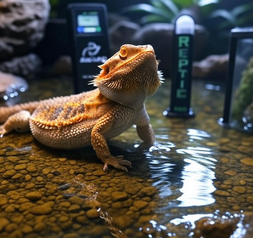
Ever watched your bearded dragon splash around in a shallow bath and wondered if they’re secretly part fish? These quirky reptiles, hailing from Australia’s dry outback, aren’t exactly built for the Olympics, but they can hold their own in water when the situation calls for it. If you’ve been pondering “can bearded dragons swim,” you’re not alone—many owners are curious about introducing water activities for fun, hygiene, or even health benefits. In this deep dive, we’ll unpack their swimming skills, the pros and cons, and how to do it safely. Drawing from pet care insights, owner stories, and expert observations, we’ll help you decide if a dip is right for your dragon. Whether you’re a newbie or a beardie veteran, these tips will keep your pet safe and happy while exploring this lesser-known side of their behavior.
Bearded dragons (Pogona vitticeps) come from arid woodlands where big bodies of water are rare, so swimming isn’t a daily routine in the wild. But in captivity, baths are common for hydration and shedding, sparking questions about their aquatic prowess. While not all dragons love the water—some paddle like pros, others panic—most can swim effectively if needed. This guide covers the how, why, and when, with practical advice to make water time enjoyable. Let’s splash in!
The Natural Habitat: Why Swimming Isn’t Instinctual for Bearded Dragons
Bearded dragons thrive in semi-desert environments, basking on rocks and foraging for insects amid sparse vegetation. Large water sources are scarce, so they get moisture from food and occasional rain. Their flattened bodies, spiny beards, and long tails are geared for land life—climbing, digging, and quick sprints—not marathon swims. In the wild, they might cross shallow puddles but avoid deep water to dodge predators or drowning.
That said, reptiles in the Agamidae family, like beardies, show opportunistic traits, including basic swimming when pushed. Arm-waving, a common display, mimics one-armed paddling, perhaps an evolutionary holdover from watery ancestors. In captivity, exposure to baths reveals this hidden talent. Owners report dragons staying calm and navigating water, but preferences vary—some relish it, others resist. This ties into their adaptability, a trait that makes them great pets but calls for careful handling around water.
For a closer look at their origins, check our What Is Natural Range Wild Bearded Dragons Australia post. Understanding their dry roots explains why swimming is a learned skill, not a natural one, and why supervision is key.
How Bearded Dragons Swim: Mechanics and Capabilities
Yes, bearded dragons can swim—and they do it with surprising flair! They inflate their bodies like balloons for buoyancy, using their tails for propulsion and limbs for paddling. This lets them stay afloat and move purposefully, even doing “laps” in bathtubs or pools. Videos show them submerging briefly, holding breath for up to two minutes, before resurfacing. They’re not built for speed like aquatic lizards, but their technique works for short stints.
Individual dragons differ—some paddle confidently, others flail in panic. Owners describe them as “excellent swimmers” in shallow water, where they use instinctual moves to navigate. Breath-holding aids brief dives, but prolonged time risks respiratory woes. Start with shallow baths to gauge comfort, using a Exo Terra Water Dish* for safe intros.
This ability might echo ancestral traits, as seen in related species. For enrichment, supervised swims can mimic wild puddle crossings, but always prioritize safety. Their robust build aids this skill, though desert origins mean they prefer wading over deep immersion. Monitor reactions with a Reptile Tank Thermometer, PAIZOO LED Digital Reptile Thermometer and Humidity Gauge* to keep water warm (85-90°F).
Benefits of Swimming for Bearded Dragons
Swimming offers perks beyond fun—it’s a tool for health and hygiene. In shallow water, it aids hydration by encouraging drinking and soaking, vital for desert natives prone to dehydration. Baths soften skin during shedding, easing the process and reducing stuck shed risks. For constipated dragons, a warm soak stimulates bowel movements, providing relief without meds.
Exercise is another win—gentle paddling builds muscle and combats obesity in less active captives. Some owners use kiddie pools for “swim time,” noting happier, more alert dragons post-dip. It also enriches their routine, fighting boredom in tanks—our DIY Enrichment Ideas Bearded Dragons has more on this. For seniors, light swims ease joint stiffness, per our Manage Arthritis Aging Bearded Dragons.
Pair swims with a Fluker’s Reptile Calcium Supplement Without Vitamin D3* dusted meal to replenish energy. Benefits shine with moderation, turning water into a wellness boost. A HERPTIVITE Multivitamin for Reptiles and Amphibians* post-swim supports recovery, especially after shedding.
Risks and Precautions When Letting Your Bearded Dragon Swim
Swimming isn’t risk-free—stress, drowning, or infections lurk if mishandled. Dragons from dry habitats may panic in water, showing black beards or frantic paddling, spiking cortisol and delaying behaviors. Deep water risks drowning; keep it chest-high. Chlorine in pools can irritate skin or eyes, potentially leading to infections—stick to fresh water or low-chlorine setups.
Precautions: Supervise always, start shallow, and watch for distress. Warm water (85-90°F) prevents chills—use a Reptile Tank Thermometer, PAIZOO LED Digital Reptile Thermometer and Humidity Gauge* to check. Avoid if your dragon hates it; not all enjoy swims. Post-swim, dry them gently with a soft towel to prevent fungal growth. For safe baths, a REPTI ZOO Full Glass 35 Gallon Reptile Tank* with a shallow dish works wonders.
These steps minimize risks, making swimming a positive experience—our Bearded Dragon Outdoor Safety has related tips. Stress indicators like rapid breathing or refusal to move signal it’s time to end the session.
How to Introduce Swimming Safely to Your Bearded Dragon
Start slow for a stress-free intro. Begin with lukewarm baths in a Exo Terra Water Dish*, no deeper than their elbows, letting them wade at their pace. Gradually add depth as they acclimate, watching for calm paddling. Sessions of 10-15 minutes, 2-3 times weekly, aid hydration without overwhelm.
For pools, use chlorine-free kiddie versions, supervising closely. If they float effortlessly, it’s a good sign; frantic moves mean stop. Reward with a treat dusted in HERPTIVITE Multivitamin for Reptiles and Amphibians* to associate water positively.
Tailor to age—juveniles may tire faster, seniors benefit from gentle soaks for arthritis. Always ensure a Arcadia Pro T5 UVB Lighting Kit – 24W – Dragon* post-swim for drying and warmth. This approach builds confidence, turning swims into fun. Use a Bearded Dragon Care Checklist to track sessions.
Busting Myths About Bearded Dragons and Water
Myths abound—let’s clear them:
- Myth: Beardies can’t swim and will drown instantly. Fact: They can paddle effectively with practice, but supervision is key.
- Myth: Swimming is essential for health. Fact: Baths help, but not all need full swims; some prefer misting.
- Myth: Chlorine is harmless. Fact: It can irritate; fresh water is safer to avoid infections.
Conclusion
So, can bearded dragons swim? Absolutely—they inflate, paddle, and propel with surprising skill, turning water into a potential playground for hydration, shedding, and fun. But benefits like exercise come with risks like stress or drowning, so shallow, supervised sessions are key. Tailor to your dragon’s personality, using tools like a Exo Terra Water Dish* for safe dips. Share your beardie’s swim stories in the comments—does yours love or loathe the water?
BeardedBuddies.com collaborates with reptile experts to provide accurate, trustworthy care advice. This site participates in the Amazon Associates Program, earning from qualifying purchases.
About the Author
Dragon King, founder of BeardedBuddies.com, here. With over seven years raising bearded dragons, my Blaze took to swimming like a champ during shedding season—a shallow Exo Terra Water Dish* made it easy and stress-free. Teaming with herpetologists like Dr. Stephanie Nelk, I share real-world tips to help owners navigate reptile care. All advice draws from expert consultations and proven practices.