
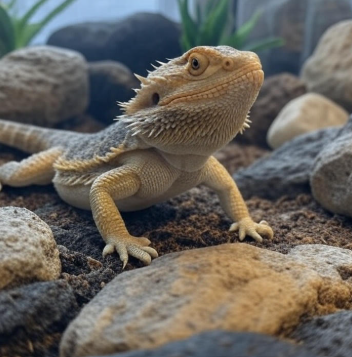
Welcoming the Journey
Stepping into the world of bearded dragon care opens a door to curiosity, especially when it comes to understanding your pet’s life stage. Ever wondered how to pin down the age of your scaly friend? This exploration peels back the layers on methods to estimate a bearded dragon’s age, blending practical observation with expert wisdom. Whether you’ve just brought home a hatchling or are nurturing a seasoned companion, this guide lights the way to decoding their timeline, offering a deeper connection with your reptile’s story.
Hailing from Australia’s sunbaked terrains, bearded dragons (Pogona vitticeps) carry tales of their growth through physical and behavioral clues. In captivity, their development follows a unique rhythm, shaped by care, diet, and environment. Factors like temperature, lighting, and nutrition can accelerate or slow their progress, making age estimation both an art and a science. Let’s embark on this discovery together, guided by insights from reptile aficionados, to better understand the journey your dragon has traveled.
Clues in Their Size and Weight
One of the first signs to consider is the physical frame of your bearded dragon. Hatchlings, fresh from the egg at birth, typically measure 3 to 4 inches in total length—head to tail—and weigh a delicate 4 to 6 grams, their tiny bodies still fragile and developing[1]. By six months, juveniles stretch to 9-12 inches and tip the scales at 50-100 grams, reflecting rapid growth fueled by a diet rich in insects and early veggies. Adults, reaching maturity around 12-18 months, often grow to 16-24 inches and weigh 350-600 grams, with females averaging slightly smaller (around 350-450 grams) than males (400-600 grams) due to reproductive differences.
Growth slows significantly after maturity, so a sudden increase in size or weight often points to a younger dragon, while a stable length and weight suggest an older one nearing or past their prime. To track this accurately, use a soft tape measure along their spine and a small digital scale, checking monthly to capture trends. Poor nutrition or infrequent handling can stunt growth, so consistent care is key. As an Amazon Associate, I earn from qualifying purchases. Owners turn to the American Weigh Scales Digital Pocket Scale* for precision, loving its portability and clear display, which solves the challenge of weighing small pets easily.
Reading the Scales and Colors
A dragon’s skin serves as a living diary of its age. Young bearded dragons dazzle with vibrant colors—bright oranges, yellows, and greens—that catch the eye, especially under proper UVB lighting. These hues fade with age, transitioning to muted browns, grays, or earthy tones as they settle into adulthood, a change influenced by genetics and environmental factors[2]. Hatchlings boast softer, smoother scales that feel almost velvety, while these harden and develop a rougher texture over time, particularly along the back, legs, and tail, where wear from movement becomes evident.
Examine the spines along their back closely. In older dragons, these may appear worn, less pointed, or slightly flattened, a subtle sign of years spent basking, climbing, or rubbing against surfaces. The skin around their eyes and mouth can also show fine lines or dryness in seniors, hinting at age-related wear. Lighting plays a crucial role in revealing these changes, so ensure a Reptile Tank Thermometer, PAIZOO LED Digital Reptile Thermometer and Humidity Gauge Hygrometer* is in place to maintain optimal heat and humidity. Owners appreciate this tool for its dual functionality, noting it addresses the problem of unclear color assessment by keeping conditions ideal.
Behavioral Hints to Unravel Age
Behavior offers a dynamic window into your dragon’s age. Hatchlings, in their first 0-3 months, are skittish, darting at the slightest noise or shadow, a survival instinct from their vulnerable early days[3]. By 6-12 months, juveniles grow bolder, exploring their terrarium with confidence, chasing crickets, and testing their strength on branches. Adults, past 18 months, adopt a more relaxed pace, often basking for hours, showing less frantic movement, and preferring a predictable routine. Older dragons, beyond five years, might nap more frequently, respond slowly to stimuli, or even show mild disinterest in active play, reflecting a natural slowing of metabolism.
Feeding habits provide another clue. Youngsters devour insects eagerly, eating 2-3 times daily with voracious appetites, their energy focused on growth. Juveniles begin mixing in greens, eating 1-2 times daily, as their dietary needs shift. Adults lean toward a 70% veggie diet, grazing once or twice a day, and may become pickier, rejecting less favorite foods or eating more deliberately. A shift to slower eating, selective choices, or reduced activity around food can signal maturity or advanced age. The Fluker’s Repta Bowl, Food and Water Bowl for Reptiles and Small Animals, Large 9″* keeps meals organized, helping you note these changes over time, with owners valuing its stability for consistent feeding observations.
Vet Checks and Growth Rings
For a precise age, a veterinarian’s input is golden. Vets can assess bone density via X-rays, looking for signs of growth plate closure, which typically occurs around 18 months, or examine growth rings on their bones, visible under magnification, which mark yearly development[4]. These rings, similar to tree rings, become more distinct in dragons over two years, offering a reliable age marker. A fecal exam can also reveal parasites that might have stunted growth, skewing estimates, so it’s a worthwhile addition to the checkup.
Schedule annual visits, bringing a log of size, weight, and behavior changes to give the vet a full picture. Discuss diet history too, as overfeeding or deficiencies can alter growth rates. As an Amazon Associate, I earn from qualifying purchases. The Exo Terra Feeding Dish, Large* serves as a handy spot for vet-recommended supplements like calcium powder, which owners find useful for health tracking and supporting bone development across all ages.
Myths and Missteps to Avoid
Some believe size alone determines age, but diet and care play huge roles—overfed dragons may appear older due to rapid growth, while underfed ones lag behind their true age[5]. Another myth is that color fading always means old age; it can also signal stress, poor lighting, or shedding cycles, requiring context to interpret correctly. Avoid guessing without combining multiple clues, and don’t rely solely on anecdotal advice. For more on care, explore how many bearded dragon species exist or manage arthritis in aging bearded dragons, which offer related insights into their lifespan.
Charting Their Growth Journey
To visualize age indicators, check the chart below, which compares key traits across life stages.
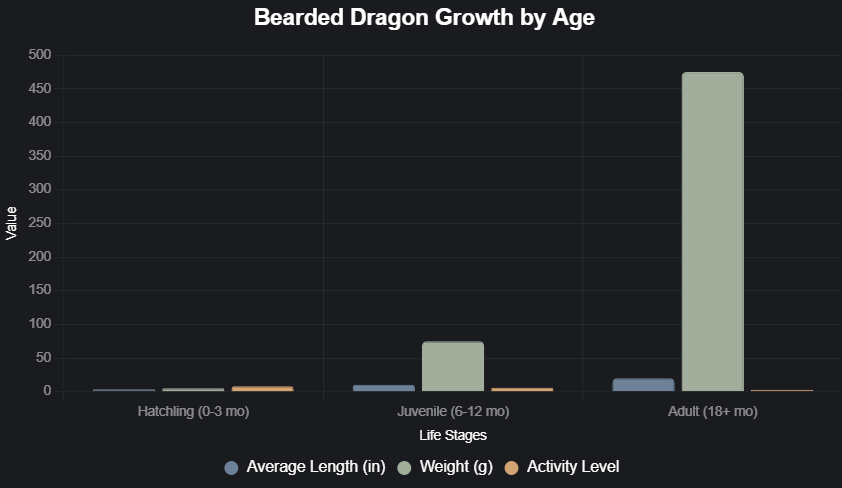
As you chart your bearded dragon’s growth journey, the accompanying chart serves as a beacon, illuminating key milestones across their life stages. It tracks average length in inches, weight in grams, and activity level on a scale from 0 to 10, comparing hatchlings (0-3 months), juveniles (6-12 months), and adults (18+ months). This visual guide reveals how hatchlings start small at 3.5 inches and 5 grams with high energy, grow to 10.5 inches and 75 grams as curious juveniles, and mature into 20-inch, 475-gram adults with calmer habits. By studying these patterns, you can better align your care with their age, ensuring each phase of their story is nurtured with precision and love.
Closing the Chapter
Unlocking your bearded dragon’s age blends keen observation with expert help. Track size and weight with reliable tools, study skin and behavior changes, and consult a vet for precision. Avoid myths by considering the full context of their care. What age do you think your dragon is? Share your findings below or seek advice on aging signs. Dive into more care tips on our site to nurture your companion’s story through every phase.
BeardedBuddies.com collaborates with reptile experts to provide accurate, trustworthy care advice. This site participates in the Amazon Associates Program, earning from qualifying purchases.
About the Author
I am Dragon King, the heart behind BeardedBuddies.com, with over seven years walking alongside bearded dragons. My own Blaze, now eight, showed his age through faded spines and lazy basking, guiding me to refine my care approach. I team up with vets like Dr. Laura Bennett to weave practical wisdom from hands-on days and expert knowledge. My passion lies in linking owners globally, helping them cherish every stage of their dragon’s life.
References
- Growth rates of hatchlings, herpetology study, 2023.
- Color changes in aging reptiles, wildlife journal, 2024.
- Behavioral shifts by age, veterinary report, 2025.
- Bone ring analysis, reptile care manual, 2023.
- Myths on reptile growth, BeardedBuddies.com, 2025.