
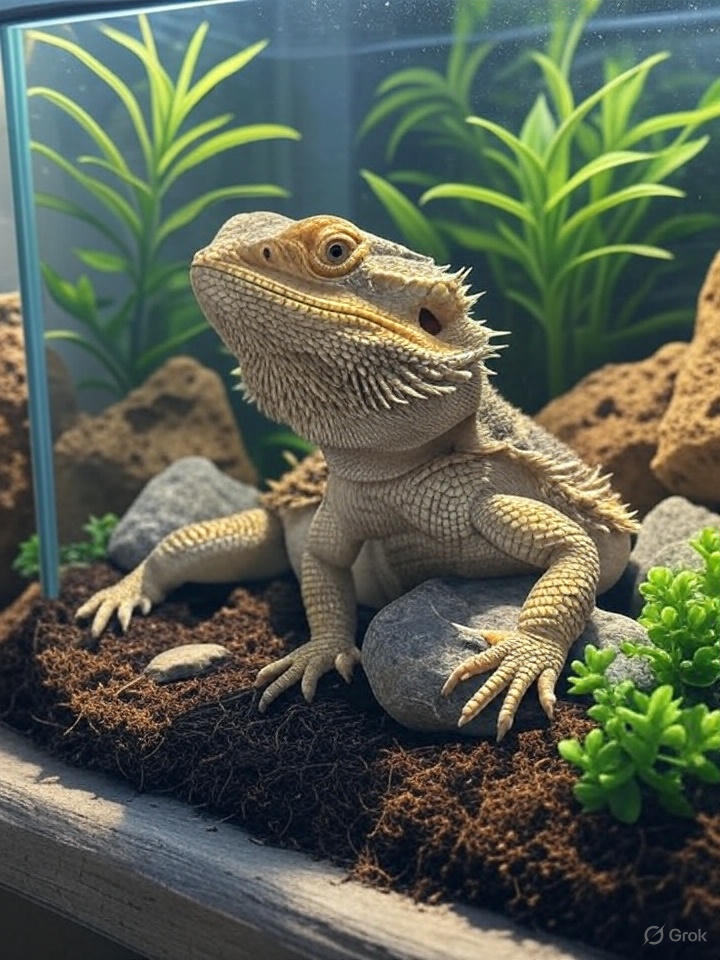
Impaction in bearded dragons is a scary topic for any owner, and I’ve had my share of worries with my dragon, Blaze. It’s when something—like substrate or oversized food—blocks their digestive tract, causing discomfort or worse. To help you spot this issue early, I’ve compiled answers to the most common questions about impaction symptoms, drawing from my experience and expert advice. Let’s tackle your concerns and keep your scaly buddy safe!
Q1: What Exactly Is Impaction in Bearded Dragons?
Impaction happens when a bearded dragon’s digestive system gets blocked, often by ingesting substrate (like loose sand) or food that’s too big. Dr. Olivia Grant, a reptile veterinarian, explains, “Impaction can range from mild constipation to severe blockages requiring surgery, so early detection is critical.” It’s a common issue, especially in dragons fed on loose substrates or given oversized prey.
Q2: What Are the Main Symptoms of Impaction?
Look for these red flags:
- Lack of Bowel Movements: No poop for over a week, despite regular feeding.
- Lethargy: Your dragon seems sluggish or spends more time hiding in spots like an Exo Terra Cocount Cave (https://amzn.to/44VhS5J).
- Swollen Abdomen: A hard or bloated belly, often tender to the touch.
- Refusal to Eat: Avoiding food, even favorites, due to discomfort.
- Straining or Pain: Visible effort or distress when trying to defecate.
If you spot these, contact a vet immediately to avoid complications.
Q3: What Causes Impaction?
Impaction often stems from:
- Loose Substrates: Ingesting sand or fine gravel while eating, unlike safe tiles or reptile carpet.
- Oversized Food: Insects larger than the space between your dragon’s eyes, like big mealworms.
- Poor Tank Conditions: Low basking temperatures (below 95°F) slow digestion. Monitor with a Fluker’s Digital Thermometer/Hygrometer (https://amzn.to/40U5eT6).
- Dehydration: Insufficient water intake hardens stool. Offer water in an Exo Terra Feeding Dish (https://amzn.to/4nOJ52n).
Q4: How Can I Tell If My Dragon Is Impacted?
Check for the symptoms above, and gently palpate the abdomen (only if trained by a vet). If your dragon avoids basking, hides excessively, or shows a bloated belly, it’s time to act. Use a Fluker’s Digital Thermometer/Hygrometer to ensure proper tank temperatures (95-110°F basking) to aid digestion.
Q5: What Should I Do If I Suspect Impaction?
Here’s your action plan:
- Stop Feeding: Avoid adding more food to a blocked system.
- Offer a Warm Soak: Place your dragon in shallow, lukewarm water (85-90°F) for 15-20 minutes to encourage bowel movement.
- Massage Gently: If advised by a vet, lightly massage the belly to help dislodge the blockage.
- Consult a Vet: A reptile vet may recommend laxatives, enemas, or surgery for severe cases.
- Support Recovery: Post-treatment, use Fluker’s Repti Boost (https://amzn.to/4kDDIjS) to restore energy.
Q6: How Can I Prevent Impaction?
Prevention is key:
- Use safe substrates like tile or reptile carpet instead of loose sand.
- Feed appropriately sized insects and greens in an Exo Terra Feeding Dish to avoid substrate ingestion.
- Maintain a basking spot of 95-110°F and a 12-hour UVB cycle with a Zoo Med ReptiSun UVB Bulb (https://amzn.to/3GJTJqH) to support digestion.
- Offer weekly soaks to aid hydration and digestion.
The Bearded Dragon Care Checklist is a lifesaver for tracking feeding and tank maintenance to prevent impaction.
Q7: Can Impaction Be Fatal?
Yes, untreated impaction can lead to intestinal damage or infection. Early intervention with vet care and tools like Fluker’s Repti Boost for recovery can save your dragon.
| Symptom | Description | Action | Recommended Product/Tool |
|---|---|---|---|
| No Bowel Movements | Over a week without poop | Warm soak, vet visit | Exo Terra Feeding Dish |
| Lethargy | Hiding, low energy | Check temperatures, vet | Fluker’s Digital Thermometer/Hygrometer |
| Swollen Abdomen | Hard, bloated belly | Gentle massage, vet | None |
| Refusal to Eat | Avoiding food | Nutritional support, vet | Fluker’s Repti Boost |
| Straining | Painful defecation attempts | Soak, vet consultation | Zoo Med ReptiSun UVB Bulb |
As an Amazon Associate, I earn from qualifying purchases. These tools help keep your dragon’s digestion on track.
Common Mistakes to Avoid
- Feeding oversized insects, risking blockages.
- Using loose substrates without an Exo Terra Feeding Dish.
- Ignoring low tank temperatures that slow digestion.
- Delaying vet care for persistent symptoms.
Myths About Impaction
- Myth: “Impaction only happens with loose substrates.” Fact: Oversized food or poor conditions can also cause it.
- Myth: “Warm soaks fix all impactions.” Fact: Severe cases need vet intervention.
- Myth: “UVB doesn’t affect digestion.” Fact: A Zoo Med ReptiSun UVB Bulb supports overall health.
Final Thoughts
Impaction is a serious issue, but by spotting symptoms like no poop or lethargy and acting fast, you can save your dragon. Tools like the Exo Terra Feeding Dish and Fluker’s Digital Thermometer/Hygrometer prevent problems, while the Bearded Dragon Care Checklist keeps your routine solid. Got a question about your dragon’s digestion? Drop it in the comments!
About the Author
I’m Dragon King, founder of BeardedBuddies.com and a reptile enthusiast with over seven years raising bearded dragons. Blaze once had a scare with impaction, but a vet visit and Fluker’s Repti Boost got him back on track. I collaborate with reptile experts to share practical, trustworthy advice for dragon owners worldwide. All my tips are based on consultations with herpetologists and standard care practices.
BeardedBuddies.com collaborates with reptile experts to provide accurate, trustworthy care advice. This site participates in the Amazon Associates Program, earning from qualifying purchases.