
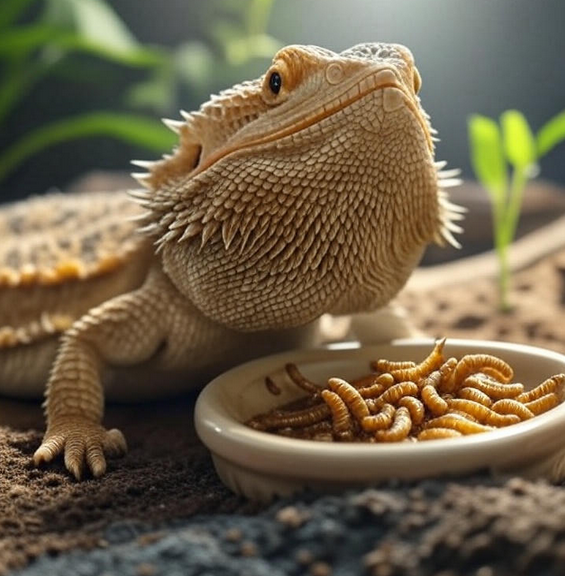
If you’re a bearded dragon owner exploring new treats, superworms might have caught your eye. These larger, meatier cousins of mealworms look tempting, but are they safe for daily munching? In this guide, we’ll dive into the nutritional value of superworms, assess their suitability for your dragon’s diet, offer safe feeding tips, and suggest alternatives. Whether you’re a newbie or refining your feeding routine, you’ll find clear answers to keep your pet thriving as of July 19, 2025.
Superworms, the larvae of darkling beetles, are a step up from mealworms in size and fat content, making them a powerful treat. But power comes with responsibility—overfeeding can spell trouble. We’ll break down the risks, benefits, and best practices to ensure your dragon enjoys them safely.
The Nutritional Breakdown of Superworms
Superworms bring a hefty nutritional profile to the table. They offer around 19% protein, 17% fat, and a bit of fiber, with moisture varying by freshness. This makes them an energy-rich option for growing dragons, but the higher fat content compared to crickets or dubia roaches raises red flags for obesity.
Their calcium-to-phosphorus ratio is skewed toward phosphorus, much like mealworms, potentially leading to calcium deficiency if not balanced with supplements. The tough exoskeleton also poses a digestion challenge, risking impaction. Vets suggest gut-loading and dusting to mitigate these issues, but variety remains essential.
I’ve watched my own dragon, Blaze, tackle superworms with gusto as a juvenile. It was exciting, but I learned quickly that moderation kept him healthy—overdoing it once left him sluggish for days.
Benefits and Risks of Feeding Superworms
Superworms shine as a treat due to their size and appeal. They stimulate natural hunting behavior, keeping your dragon active, and their larger body provides a satisfying meal for juveniles or adults needing a boost. Their availability in pet stores adds convenience for busy owners.
However, the downsides are significant. The high fat content can lead to weight gain, and the hard exoskeleton increases impaction risk, especially for younger dragons with less robust digestion. Excessive phosphorus without calcium supplementation may trigger metabolic bone disease, weakening bones over time. Research highlights that frequent superworm feeding correlates with health issues in captive reptiles.
As an Amazon Associate, I earn from qualifying purchases. Concerned about nutrient balance? The Zoo Med 3 Pack of Can O’ SuperWorms, 1.2 Ounces Per Can* optimizes superworms with added nutrients—vets recommend it for a safer treat.
For adults, occasional superworms can work with care, but babies should avoid them until they’re stronger digesters around 6 months.
Safe Feeding Practices for Superworms
How to feed superworms safely? Start with portion control: babies (under 6 months) should skip them entirely due to digestion risks. Juveniles (6-12 months) can have 5-10 weekly, while adults can handle 10-15 every few days as a treat. Always gut-load superworms 24-48 hours with nutrient-rich food and dust with calcium powder to offset phosphorus.
Offer them with tongs to avoid bites—superworms can nip—and monitor your dragon’s reaction. Overfeeding signs include a swollen belly or reduced activity. A quiet feeding spot helps reduce stress.
Here’s a table to guide superworm portions:
| Age Group | Weekly Superworms Limit | Frequency Recommendation | Notes |
|---|---|---|---|
| Baby (0-6 months) | 0 | Avoid | Risk of impaction; stick to smaller insects. |
| Juvenile (6-12 months) | 5-10 | 1-2 times/week | Monitor digestion; pair with supplements. |
| Adult (1+ years) | 10-15 | 1-2 times/week | Use as a treat; balance with greens. |
| Senior (5+ years) | 3-5 | Once/week | Limit fat intake for health. |
This framework helps tailor feeds to your dragon’s stage, minimizing risks.
Alternatives to Superworms
If superworms aren’t ideal daily, consider alternatives. Crickets and dubia roaches offer lower fat and better digestion, while phoenix worms provide natural calcium. Black soldier fly larvae are another calcium-rich option, perfect for variety.
Adults should get 80% veggies (collards, squash, bell peppers) and 20% insects, reversing that for juveniles. Hydration via misted greens or a shallow dish is key.
As an Amazon Associate, I earn from qualifying purchases. A must-have tool while supplies last, the Exo Terra Feeding Tongs* ensures safe handling—pair it with our free feeding technique for stress-free meals.
Owners rely on Fluker’s Live Crickets, 100 Count Feeder Insects* for varied diets—use our tip to rotate insects weekly.
Common Myths and Misconceptions
Myth: Superworms are just big mealworms. Fact: They’re fattier and harder to digest, requiring different care. Myth: They’re safe daily for all ages. Truth: Only adults can handle them sparingly, with caution.
Freezing doesn’t eliminate all risks—it helps with parasites but not nutrition. Source from trusted suppliers to avoid issues.
If your dragon shows lethargy or odd stools, scale back and consult a vet like Dr. Stephanie Nelk.
Health Monitoring After Superworm Feeding
Watch for weight changes, energy levels, and stool consistency. Healthy dragons stay active with solid waste; problems like impaction need immediate attention. Annual vet visits are a smart move.
As an Amazon Associate, I earn from qualifying purchases. Vets recommend Repti Calcium with D3 (3oz)* for strong bones—pair it with our free dusting guide to balance superworm feeds.
Conclusion
Superworms can be a tasty treat for bearded dragons, but daily feeding isn’t safe due to fat and digestion risks. Follow guidelines, mix in alternatives, and monitor health to keep your dragon thriving. What’s your favorite feeder insect? Share in the comments—we’re here to learn together!
About the Author
I’m Dragon King, founder of BeardedBuddies.com and a reptile enthusiast with over seven years raising bearded dragons. My dragon, Blaze, once chomped superworms too eagerly as a teen, teaching me the value of portion control after a sluggish day. I collaborate with herpetologists to offer reliable advice, helping owners worldwide feed their dragons smartly. All tips draw from real-world care and vetted practices.
BeardedBuddies.com collaborates with reptile experts to provide accurate, trustworthy care advice. This site participates in the Amazon Associates Program, earning from qualifying purchases.