
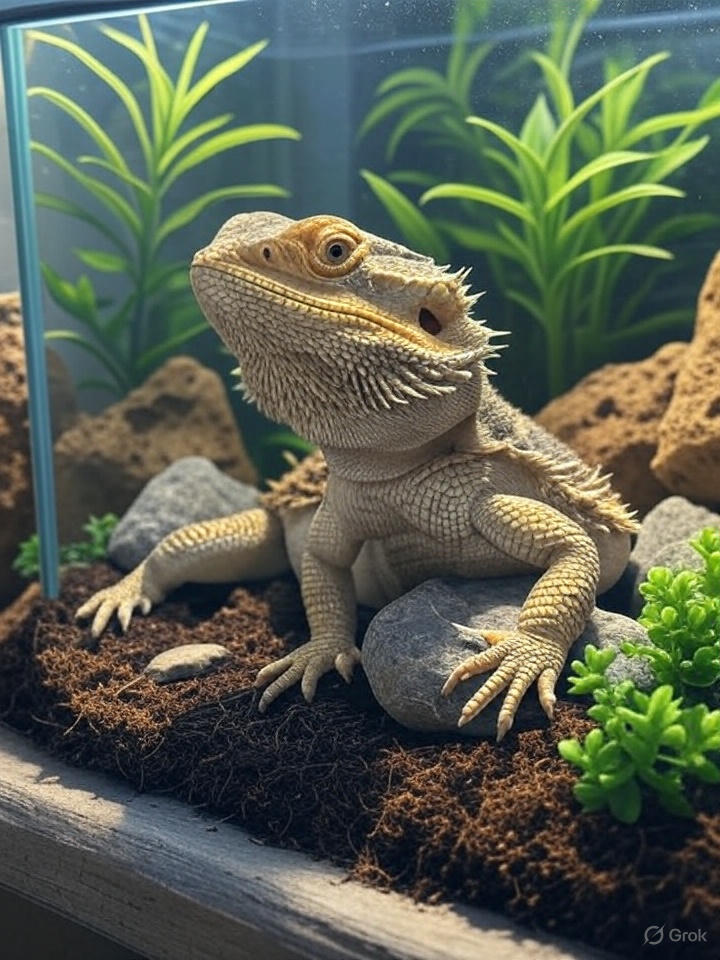
Bearded dragons, with their captivating charm and desert heritage from Australia’s arid landscapes, require thoughtful adjustments as they age beyond 6–8 years, making senior bearded dragon care essential for their comfort and well-being. Aging dragons face challenges like reduced mobility, slower digestion, and stress sensitivity, but with the right approach, they can thrive in their golden years. Rooted in their resilient nature, these changes enhance their quality of life. Drawing from extensive reptile care expertise and veterinary insights, this guide offers practical tips. Begin now to support your senior dragon’s health and happiness.
This article covers habitat adjustments, temperature/humidity optimization, diet/hydration, health monitoring, stress reduction/enrichment, female health needs, and conclusion. Start today to ensure your dragon’s comfort.
Disclosure: This post contains affiliate links. I may earn a small commission from purchases made through these links at no additional cost to you (#CommissionsEarned).
Adjust Their Habitat for Easy Access
Senior bearded dragon care involves modifying their enclosure for reduced mobility due to joint stiffness or muscle loss. Add ramps or low platforms (under 6 inches) for accessible basking spots, using a broad slate tile or flat platform, per Bearded Dragons World (https://beardeddragonsworld.com/bearded-dragon-aging-care-for-senior-years/). Maintain a 92–110°F (33–43°C) basking area and 75–85°F (23.8–29°C) cool side, with 10–12% UVB lighting to prevent MBD, using reptile-safe sand or tiles to avoid impaction. Enhance your setup with ramps and substrates on Amazon (https://amzn.to/4lku8DG).
Optimize Temperature and Humidity
Optimal conditions are vital for senior bearded dragon care, with a 92–110°F basking zone supporting joint comfort and a 75–85°F cool area for regulation, per ABDragons (https://abdragons.com/blog/does-aging-affect-your-bearded-dragons-care/). Maintain 30–40% humidity to avoid respiratory or skin issues, using a digital thermometer and hygrometer for daily checks. Stable settings reduce arthritis stress. Enhance your monitoring with thermometers on Amazon (https://amzn.to/4lku8DG).
Provide a Balanced Diet and Hydration
Tailor senior bearded dragon care with a high-fiber diet—collard greens, mustard greens, dandelion greens—for easier digestion, limiting high-fat mealworms or superworms to low-fat crickets, silkworms, or hornworms, per Safari Vet (https://www.safarivet.com/care-topics/reptiles-and-amphibians/bearded-dragon/). Chop finely, using soft-tipped tongs if needed. Hydrate with a shallow water dish, misted food, or hydrating veggies like cucumbers, spraying their nose daily for kidney support. Dust insects with calcium 2–3 times weekly and vitamins once, consulting a vet. Enhance your feeding with tongs on Amazon (https://amzn.to/4lku8DG).
Monitor Health and Veterinary Needs
Regular health checks are key to senior bearded dragon care, watching for constipation, arthritis, or dehydration signs like lethargy or reduced mobility, per PetMD (https://www.petmd.com/reptile/bearded-dragon-care-sheet). Schedule vet visits with blood work and X-rays, weighing weekly/monthly with a digital scale to track weight and events. Avoid breeding females to prevent egg-binding, ensuring calcium-rich diets and UVB. Seek vet help for tremors or unsteady movements. Enhance your monitoring with scales on Amazon (https://amzn.to/4lku8DG).
Reduce Stress and Provide Enrichment
Minimize stress in senior bearded dragon care by placing their enclosure in a quiet, low-traffic area, blocking views of other animals, and limiting handling to 10–15-minute gentle sessions to avoid temperature drops, per ABDragons (https://abdragons.com/blog/does-aging-affect-your-bearded-dragons-care/). Add light enrichment—hide greens for foraging or supervised warm exploration—plus safe decorations like stones or shaded windows. This keeps them relaxed and engaged. Enhance your setup with hides on Amazon (https://amzn.to/4lku8DG).
Address Female-Specific Health Needs
Senior bearded dragon care for females includes avoiding breeding to prevent egg-binding, a life-threatening stress, per a 2023 Journal of Exotic Pet Medicine study (https://doi.org/10.1016/j.jepm.2023.03.001). Ensure calcium-rich diets and 10–12% UVB lighting to avoid MBD, monitoring for bloating, lethargy, or appetite loss—consult a vet immediately if seen. Regular checkups support their health.
Conclusion: Support Your Senior Dragon’s Golden Years
Senior bearded dragon care, with habitat tweaks, optimal conditions, tailored diet, health monitoring, stress reduction, and female-specific care, ensures comfort and vitality in later years, reflecting their wild resilience. Start enhancing your dragon’s environment today—click here to explore our blog for more senior care insights and connect with a community of owners. Join the reptile care community to share tips and elevate your approach. Ensure your dragon thrives with ramps, substrates, thermometers, tongs, scales, and hides on Amazon (https://amzn.to/4lku8DG). Share your senior care experiences in the comments and consult a veterinarian for tailored advice to keep your beardie flourishing.