
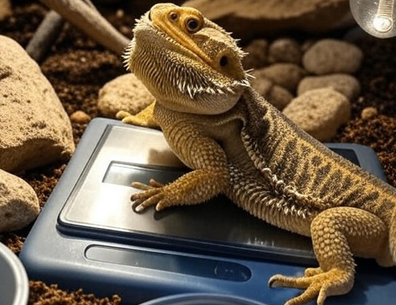
Noticing your bearded dragon looking a bit rounder lately? Maybe its belly seems fuller, or it’s moving a little slower. As a devoted owner, it’s natural to wonder if your scaly friend is healthy or carrying extra weight. Bearded dragons can indeed become overweight, and catching it early is key to their well-being. In this guide, we’ll explore how to spot an overweight bearded dragon, measure their weight accurately, understand the causes and risks of obesity, share practical tips to keep them fit, and debunk common myths. Let’s ensure your dragon thrives for years to come.
Signs Your Bearded Dragon Might Be Overweight
Determining if your bearded dragon is overweight starts with observation. These lizards naturally have a sturdy build, but there’s a difference between healthy bulk and excess fat. From above, a healthy dragon’s body forms a slight triangle, tapering behind the front legs. If your dragon looks more cylindrical, like a plump sausage, that’s a red flag.
Check the fat pads next. Bearded dragons store fat in their head, tail base, and sometimes legs. Swollen jowls or an overly thick tail base suggest excess weight. Mobility is another clue—overweight dragons may struggle to climb or seem less active during basking. A dragging belly while walking is a sign to investigate further. Gently pinch the skin on their back; it should feel firm, not mushy. If you notice loose skin folds or reduced energy, it’s worth a closer look. When in doubt, a reptile vet like Dr. Stephanie Nelk can assess their body condition score for clarity.
How to Weigh and Measure Your Bearded Dragon
To confirm if your dragon is overweight, you need data. Weighing and measuring regularly gives you a baseline to track changes. A reliable scale is essential—many owners trust tools like the Zoo Med Digital Scale * for precise readings. As an Amazon Associate, I earn from qualifying purchases. Gently place your dragon on the scale, ensuring it’s calm to avoid stress. For length, measure from nose to tail tip when they’re stretched out, ideally during a relaxed moment.
Compare your dragon’s stats to standard ranges. Hatchlings are tiny (3-6 inches, 4-20 grams), while adults typically reach 18-24 inches and 350-600 grams, with males often larger. The table below shows average weights and lengths by age, but genetics vary, so use it as a guide.
| Age/Size | Length (inches) | Ideal Weight (grams) | Notes |
|---|---|---|---|
| Hatchling (0-2 months) | 3-6 | 4-20 | Rapid growth; weigh weekly. |
| Juvenile (2-6 months) | 6-12 | 20-150 | High energy needs; control portions. |
| Sub-Adult (6-12 months) | 12-18 | 150-350 | Growth slows; adjust diet. |
| Adult (12+ months) | 18-24 | 350-600 | Stable weight; monitor monthly. |
If your dragon’s weight exceeds these ranges by 20% or more, it may be overweight. Owners love the Zoo Med Digital Scale * for its ease in tracking trends over time.
Causes of Obesity in Bearded Dragons
Bearded dragon obesity often stems from a few common habits. Overfeeding is the biggest issue. These lizards adore insects like mealworms or superworms, but these are high in fat. Adults should eat 80% greens (collards, dandelion greens) and 20% protein, while juveniles need more protein. Overloading on treats or large portions throws this balance off. Use a portion-controlled dish like the Fluker’s Repta-Bowl * to keep meals in check.
Lack of exercise is another factor. In the wild, bearded dragons climb and explore, but a bare tank limits movement. Small enclosures or no climbing structures lead to a sedentary lifestyle. Temperature and lighting also matter—improper heat (95-110°F basking, 75-85°F cool) or insufficient UVB slows metabolism. A quality UVB source like the Zoo Med ReptiSun UVB Bulb * ensures proper calcium absorption, keeping your dragon active. Owners swear by the Exo Terra Terrarium Thermometer * to maintain optimal tank conditions.
Poor hydration or stress can indirectly contribute. Dehydrated dragons may overeat to compensate, so ensure clean water is available. Check out our Bearded Dragon Diet Guide for tailored feeding plans to avoid these pitfalls.
Health Risks of Obesity
Excess weight isn’t just a cosmetic issue—it’s a health hazard. Overweight bearded dragons are prone to fatty liver disease, where fat accumulates in organs, leading to lethargy or organ failure. Joint problems are common too; extra weight strains legs, causing arthritis or mobility issues. Metabolic bone disease (MBD) is a risk, especially if the diet lacks balance. Supplement with Zoo Med Repti Calcium * to support bone health without excess calories.
Obesity can shorten lifespan and increase susceptibility to infections or digestive issues like impaction. Dr. Stephanie Nelk, a reptile veterinarian, notes that overweight dragons often face heart strain, similar to other animals. Monitoring tank conditions with tools like the Exo Terra Terrarium Thermometer * helps maintain a healthy environment to prevent these risks.
Practical Tips for Weight Management
Helping your bearded dragon shed extra weight is achievable with consistent changes. Start with diet. Reduce fatty insects like mealworms and focus on leaner options like crickets or dubia roaches. Limit treats to once a week. Use a dish like the Exo Terra Feeding Dish * to control portions and prevent overfeeding. Dust insects with Zoo Med ReptiVite Multivitamin * weekly to ensure balanced nutrition without piling on calories.
Encourage exercise by enhancing the tank. Add branches, rocks, or hammocks to promote climbing. Supervised time outside the tank (10-15 minutes daily in a safe space) boosts activity. Maintain optimal tank temperatures to support metabolism—verify with the Exo Terra Terrarium Thermometer *. UVB lighting is critical; the Zoo Med ReptiSun UVB Bulb * is a favorite for ensuring proper light exposure.
Weigh your dragon regularly with the Zoo Med Digital Scale * to track progress. If weight doesn’t decrease after 4-6 weeks, consult a vet to rule out underlying issues like thyroid problems or egg-laying in females. Consistency is key—small changes add up.
Busting Myths About Bearded Dragon Weight
Misinformation about bearded dragon weight is common. One myth is that a chubby dragon is a healthy dragon. Not true—excess fat leads to serious health risks, as we’ve discussed. Another misconception is that all dragons should weigh the same. Weight varies by age, sex, and genetics, so compare your dragon to the ranges in our table, not other pets.
Some believe cutting food drastically fixes obesity. This can cause stress or nutrient deficiencies, harming your dragon. Instead, balance greens, protein, and supplements like Zoo Med Repti Calcium *. Finally, a big belly doesn’t always mean fat—it could indicate eggs in females or impaction. A vet visit confirms the cause, so don’t assume.
Conclusion
Keeping your bearded dragon at a healthy weight is about observation, balance, and care. By checking for signs of obesity, using tools like the Zoo Med Digital Scale * to monitor weight, and adjusting diet and environment, you can help your dragon stay fit. Products like theFluker’s Repta-Bowl * and Zoo Med ReptiVite Multivitamin * make it easier to manage portions and nutrition. Owners love our Bearded Dragon Care Checklist for tailored, downloadable care plans to keep things on track. Have tips or questions about your dragon’s diet or setup? Share them in the comments below!
About the Author
Dragon King, founder of BeardedBuddies.com, has spent over seven years raising bearded dragons, including his trusty companion, Blaze. A passionate reptile enthusiast, Dragon King once caught Blaze trying to sneak an extra cricket from the Exo Terra Feeding Dish *, sparking a focus on portion control. Collaborating with herpetologists and veterinarians, he shares practical advice to help owners worldwide give their dragons the best care. All tips are based on expert consultations and standard reptile care practices.
BeardedBuddies.com collaborates with reptile experts to provide accurate, trustworthy care advice. This site participates in the Amazon Associates Program, earning from qualifying purchases.