
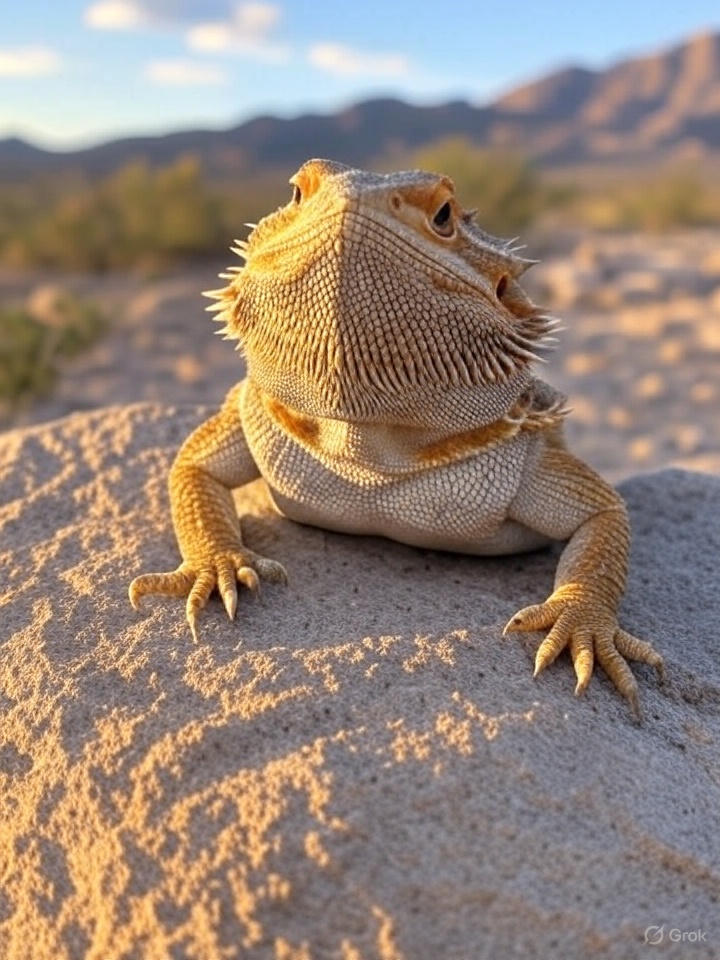
Bearded dragons are masters of surviving the scorching Australian outback, but how do they keep their cool (or heat up) in such extreme conditions? As ectothermic reptiles, they rely on their environment to regulate body temperature, a process called thermoregulation. Understanding how they do this in the wild helps you recreate those conditions in captivity, keeping your dragon healthy and active. From basking under the sun to hiding in cool burrows, here are seven key ways bearded dragons manage their body temperature, plus practical tips to support them in your home. Let’s dive in and set up your dragon’s perfect desert vibe!
1. Basking in the Heat
Bearded dragons love soaking up heat from the sun in the wild, perching on rocks or branches to raise their body temperature to an optimal 95-100°F. This warmth fuels digestion, metabolism, and activity. In captivity, you can mimic this with an Exo Terra Basking Spot Lamp to create a basking spot of 95-110°F for adults (100-115°F for juveniles). Dr. Rachel Wong, a herpetologist, says, “Basking is critical for bearded dragons to maintain metabolic functions, so a reliable heat source is non-negotiable.” Place a flat rock under the lamp for heat retention and check temperatures with a Fluker’s Digital Thermometer/Hygrometer to keep it spot-on.
Pro Tip: Adjust the lamp’s heat output with a Zoo Med ReptiTemp Rheostat to prevent overheating, especially during summer.
2. Seeking UVB Light for Vitamin D3
In the wild, bearded dragons bask under sunlight to absorb UVB rays, which help produce vitamin D3 for calcium absorption and muscle health. Without UVB, they can’t thermoregulate effectively, leading to weakness or metabolic bone disease. In your enclosure, a Zoo Med ReptiSun UVB Bulb placed 6-12 inches from the basking spot mimics this natural sunlight. Replace it every 6-12 months to ensure strong UVB output, supporting your dragon’s energy for thermoregulation.
Pro Tip: Use a timer for a 12-hour light cycle to replicate the wild day-night rhythm, keeping your dragon’s internal clock in sync.
3. Moving to Cooler Zones
When it gets too hot, bearded dragons retreat to shaded areas like under rocks or in burrows to cool down to 75-80°F. This behavior prevents overheating and maintains their ideal body temperature. In captivity, create a cool side in the tank (75-80°F) with a hide like an Exo Terra Cocount Cave for a cozy retreat. Monitor the cool side with a Fluker’s Digital Thermometer/Hygrometer to ensure it stays in the safe range, allowing your dragon to thermoregulate naturally.
Pro Tip: Place the hide away from the basking lamp to maintain a clear temperature gradient, encouraging movement between zones.
4. Digging Burrows for Temperature Control
In the wild, bearded dragons dig shallow burrows to escape extreme heat or cold, maintaining a stable body temperature during the day or night. This behavior is especially common during brumation or hot afternoons. In your tank, a naturalistic substrate like Zoo Med Eco Earth Loose Coconut Fiber Substrate allows digging, mimicking this instinct. Add an Exo Terra Cocount Cave for a pre-made burrow option, giving your dragon a safe spot to cool off or rest.
Pro Tip: The Bearded Dragon Enclosure Calculator helps you design a tank with space for digging and hiding, tailored to your dragon’s needs.
5. Adjusting Body Position
Bearded dragons are clever about positioning their bodies to control heat absorption. They may flatten out to maximize heat intake or raise their body to reduce contact with hot surfaces. In captivity, provide varied surfaces like rocks, branches, or platforms near the Exo Terra Basking Spot Lamp to allow these adjustments. This setup encourages natural thermoregulation behaviors, keeping your dragon comfortable and active.
Pro Tip: Observe your dragon’s posture—flattening or pancaking often signals they’re soaking up heat, while standing tall means they’re cooling off.
6. Panting to Release Heat
When overheated, bearded dragons may pant or gape their mouths to release excess heat, a behavior seen in the wild during intense heatwaves. In captivity, this can indicate a basking spot that’s too hot (above 110°F). Use a Zoo Med ReptiTemp Rheostat to dial down the Exo Terra Basking Spot Lamp if you notice panting, and check temperatures with a Fluker’s Digital Thermometer/Hygrometer to keep the basking zone safe.
Pro Tip: If panting persists, consult a reptile veterinarian, as it may signal stress or health issues beyond heat.
7. Behavioral Adaptations During Brumation
In the wild, bearded dragons enter brumation (a low-energy state) during cooler months, reducing activity to conserve heat and energy. They hide in burrows or under rocks to maintain a stable temperature. In captivity, seniors or dragons in cooler climates may brumate, needing a cool, safe hide like an Exo Terra Cocount Cave. Monitor nighttime temperatures (65-75°F) to support this natural process, ensuring your dragon stays healthy.
Pro Tip: The Bearded Dragon Care Checklist helps track temperature and behavior changes during brumation, keeping your dragon’s care on point.
| Thermoregulation Method | Wild Behavior | Captive Support | Recommended Product/Tool |
|---|---|---|---|
| Basking | Soaks up sun on rocks | Basking spot at 95-110°F | Exo Terra Basking Spot Lamp, Zoo Med ReptiTemp Rheostat |
| UVB Absorption | Uses sunlight for vitamin D3 | UVB bulb 6-12” from basking | Zoo Med ReptiSun UVB Bulb |
| Cooling in Shade | Retreats to burrows or shade | Cool side at 75-80°F | Exo Terra Cocount Cave |
| Digging Burrows | Hides to stabilize temperature | Natural substrate for digging | Zoo Med Eco Earth Loose Coconut Fiber Substrate |
| Body Positioning | Adjusts posture for heat control | Varied basking surfaces | Exo Terra Basking Spot Lamp |
| Panting | Releases excess heat | Prevent overheating | Fluker’s Digital Thermometer/Hygrometer |
| Brumation | Reduces activity in cool months | Cool, safe hide | Exo Terra Cocount Cave |
As an Amazon Associate, I earn from qualifying purchases. These tools help your dragon thermoregulate like they would in the wild.
Common Mistakes to Avoid
- Overheating the Basking Spot: Temperatures above 110°F cause stress or heatstroke. Adjust with a Zoo Med ReptiTemp Rheostat.
- Inadequate UVB: Low-quality or old bulbs weaken thermoregulation. Use a Zoo Med ReptiSun UVB Bulb and replace it regularly.
- No Cool Zone: Without a cool side (75-80°F), dragons can’t regulate properly. Include an Exo Terra Cocount Cave for shade.
- Ignoring Humidity: High humidity (above 40%) disrupts thermoregulation. Monitor with a Fluker’s Digital Thermometer/Hygrometer.
Myths About Bearded Dragon Thermoregulation
- Myth: “Bearded dragons don’t need a cool side.” Fact: A cool zone with an Exo Terra Cocount Cave is essential for thermoregulation.
- Myth: “Any heat lamp works.” Fact: A focused Exo Terra Basking Spot Lamp ensures proper basking temperatures.
- Myth: “Thermoregulation is automatic in captivity.” Fact: Owners must provide gradients and tools like the Bearded Dragon Enclosure Calculator to support it.
Wrap-Up: Keep Your Dragon’s Temperature Just Right
Bearded dragons regulate their body temperature through basking, seeking UVB, cooling off, digging, and adjusting behaviors—skills honed in the wild. By setting up a tank with an Exo Terra Basking Spot Lamp, a Zoo Med ReptiSun UVB Bulb, and an Exo Terra Cocount Cave, you can mimic these natural strategies. Tools like the Bearded Dragon Enclosure Calculator and Bearded Dragon Care Checklist make it easy to maintain the perfect environment. Got a question about your dragon’s basking habits? Drop it in the comments or share your setup tips!
About the Author
I’m Dragon King, founder of BeardedBuddies.com and a reptile enthusiast with over seven years raising bearded dragons. My dragon, Blaze, loves his basking spot under an Exo Terra Basking Spot Lamp, and I keep it dialed in with a Fluker’s Digital Thermometer/Hygrometer. I collaborate with reptile experts to share practical, trustworthy advice for dragon owners worldwide. All my tips are based on consultations with herpetologists and standard care practices.
BeardedBuddies.com collaborates with reptile experts to provide accurate, trustworthy care advice. This site participates in the Amazon Associates Program, earning from qualifying purchases.