
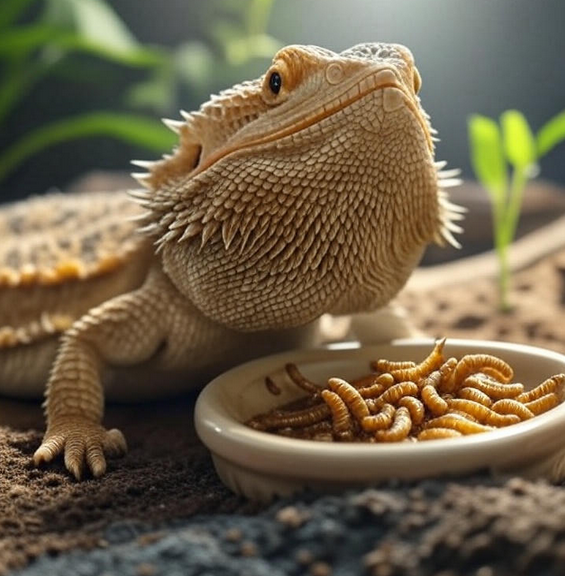
If you’re a bearded dragon owner, you’ve probably wondered about the best treats to keep your scaly friend happy and healthy. Mealworms are a popular choice—they’re easy to find, affordable, and beardies seem to love chasing them down. But can you feed them every day without causing issues? In this post, we’ll break down the nutrition behind mealworms, weigh the pros and cons for daily feeding, suggest safe guidelines, and explore better alternatives. Whether you’re new to dragon care or tweaking your routine, you’ll get the facts to make informed choices for your pet’s diet.
Mealworms might look like a simple snack, but their role in a bearded dragon’s menu needs careful thought. These larvae of darkling beetles offer protein and fats, but they’re not a complete food. Over-reliance can lead to health problems, so understanding balance is key. We’ll cover everything from portion sizes to signs of overfeeding, helping you avoid common pitfalls.
The Nutritional Profile of Mealworms
Mealworms pack a punch in some areas but fall short in others. A typical mealworm contains about 20% protein, 13% fat, and small amounts of fiber, with moisture making up the rest. They’re a decent source of energy for active dragons, but their chitin shell is tough to digest, and they lack key vitamins like A and D3.
Compared to staples like crickets or dubia roaches, mealworms have higher fat content, which can contribute to obesity if fed too often. Calcium-to-phosphorus ratio is another concern—mealworms have more phosphorus, which binds calcium and can lead to deficiencies over time. Reptile vets emphasize dusting insects with supplements to counter this, but even then, variety prevents imbalances.
From my hands-on time with dragons, I’ve seen how mealworms excite them during feeds, but relying on them alone misses the mark for long-term health. Experts like Dr. Stephanie Nelk recommend viewing them as occasional treats rather than mains.
Pros and Cons of Daily Mealworm Feeding
Feeding mealworms daily has upsides, like convenience and appeal. They’re readily available at pet stores, and their wriggling draws out natural hunting instincts, keeping your dragon engaged. For picky eaters, they can encourage appetite, especially in juveniles needing high protein.
On the flip side, the risks add up. High fat leads to weight gain, and poor digestion from chitin can cause impaction, a serious blockage in the gut. Phosphorus overload without enough calcium risks metabolic bone disease, weakening bones and causing deformities. Studies on reptile nutrition show that diets heavy in mealworms often result in shorter lifespans or vet visits.
As an Amazon Associate, I earn from qualifying purchases. Solve digestion issues with Repti Calcium with D3 (3oz)*—owners swear by it for strong bones, especially with mealworm feeds, and it’s a must-have while supplies last. If your dragon is young and growing, limited daily feeds might work with monitoring, but adults fare better with them spaced out. The key is moderation—think of mealworms as dessert, not the main course.
Safe Feeding Guidelines for Bearded Dragons
So, how often is too often? For baby bearded dragons (under 4 months), aim for no more than 5-10 mealworms a day, mixed with other insects and greens. Juveniles (4-12 months) can handle 10-20, but not every day—alternate with better options. Adults should stick to 5-10 every few days as treats.
Always gut-load mealworms 24 hours before feeding by giving them nutrient-rich foods. Dust with calcium powder to balance ratios. Watch portion sizes based on your dragon’s size—overfeeding shows in a pudgy tail or lethargy.
Here’s a quick table to guide mealworm portions by age:
| Age Group | Daily Mealworms Limit | Frequency Recommendation | Notes |
|---|---|---|---|
| Baby (0-4 months) | 5-10 | 2-3 times/week | Pair with high-protein insects for growth. |
| Juvenile (4-12 months) | 10-20 | 3-4 times/week | Monitor weight; add veggies daily. |
| Adult (1+ years) | 5-10 | 1-2 times/week | Focus on greens; use as occasional treats. |
| Senior (5+ years) | 3-5 | Once/week | Prioritize low-fat options for health. |
This setup helps tailor feeds to your dragon’s needs, reducing risks while keeping meals fun.
Alternatives to Mealworms for a Balanced Diet
If daily mealworms aren’t ideal, what should you switch to? Crickets and dubia roaches offer better nutrition with lower fat and easier digestion. Phoenix worms or black soldier fly larvae provide calcium naturally, making them superfoods for dragons.
Veggies like collard greens, squash, and bell peppers should make up 80% of an adult’s diet, with insects at 20%. For juveniles, flip that ratio. Hydration matters too—mist greens or offer water dishes.
As an Amazon Associate, I earn from qualifying purchases. Worried about nutritional gaps from mealworms? The Zoo Med Bearded Dragon Adult Wet Food, 6-Ounce* fills the void with balanced nutrients—vets and owners rave about it for picky eaters.
Breeders recommend gut-loading for healthier meals. Try the Fluker’s High Calcium Mealworm Diet* to boost your worms’ value before feeding—pair it with our free gut-loading hack for best results.
Common Myths About Mealworm Feeding
Myth one: Mealworms are a complete diet. Fact: They lack essential nutrients, so variety is crucial. Myth two: Superworms are the same—actually, they’re larger and fattier, best avoided daily.
Another misconception: Freezing kills risks. While it helps with parasites, it doesn’t fix nutritional issues. Always source from reputable suppliers to minimize dangers.
If your dragon shows signs like soft bones or constipation, cut back and consult a vet. Prevention beats cure in reptile care.
Monitoring Your Dragon’s Health with Mealworms
Keep an eye on weight, activity, and stool. Healthy dragons are alert with firm poops; issues signal diet tweaks. Annual vet check-ups catch problems early.
A sturdy dish reduces mess during meals. The Zilla Terrarium Dishes Medium* is a must-have while supplies last—pair it with our free portion tip for cleaner routines.
Conclusion
Mealworms can be part of your bearded dragon’s diet, but daily feeding isn’t the best move due to fat, digestion, and nutrient concerns. Stick to guidelines, mix in alternatives, and watch for health signs to keep your pet thriving. What’s your go-to insect for feeds? Drop a comment below and share your setup—we’re all learning together.
About the Author
I’m Dragon King, founder of BeardedBuddies.com and a reptile enthusiast with over seven years raising bearded dragons. My dragon, Blaze, once went wild for mealworms as a juvenile, gobbling them up so fast I’d worry about his balance. Switching to a varied menu with gut-loaded treats kept him healthy and energetic. I team up with herpetologists to deliver solid advice, helping owners everywhere feed their dragons right. All tips stem from real experiences and standard care practices.
BeardedBuddies.com collaborates with reptile experts to provide accurate, trustworthy care advice. This site participates in the Amazon Associates Program, earning from qualifying purchases.