
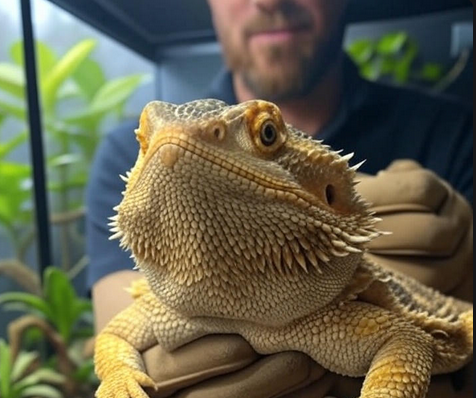
When your bearded dragon bites, it can be surprising and even a little disheartening—after all, these scaly friends are usually known for their calm demeanor. Biting is not typical behavior for bearded dragons (Pogona vitticeps), but it can happen for specific reasons, from stress to territorial instincts. Understanding the causes of biting and their effects helps you address the behavior effectively, ensuring a happier, healthier dragon. Dr. Melissa Vaughn, a reptile behaviorist, explains, “Biting in bearded dragons often stems from environmental or behavioral triggers, but with the right approach, it can be prevented.” This cause-and-effect guide explores why your bearded dragon might be biting and provides practical solutions to stop it, keeping your bond strong.
Cause 1: Stress or Fear
Effect: Bearded dragons may bite when they feel threatened, scared, or stressed, especially during handling. This can occur in new environments, after startling experiences, or if the dragon feels cornered. Stress-induced biting is often accompanied by puffing up, black bearding, or hissing.
Solutions:
- Create a Safe Environment: Provide a secure hide like an Exo Terra Cocount Cave to give your dragon a retreat, reducing fear-based biting. Place the hide on the cool side (75-80°F) of the tank.
- Gentle Handling: Start with short, calm handling sessions (5-10 minutes) and avoid sudden movements. Scoop from below to support their body, minimizing stress.
- Minimize Triggers: Keep the tank in a quiet, low-traffic area to avoid startling your dragon. Monitor for stress signs like glass surfing or rapid breathing.
Cause 2: Improper Tank Conditions
Effect: Incorrect temperatures or lighting can stress bearded dragons, leading to irritability and biting. If the basking spot is too hot (>110°F) or too cold (<95°F), or if UVB exposure is inadequate, dragons may become uncomfortable, increasing aggression during handling.
Solutions:
- Maintain a Temperature Gradient: Use an Exo Terra Basking Spot Lamp (from a prior request) for a basking spot of 95-110°F (100-115°F for juveniles) and a Zoo Med ReptiTemp Rheostat (from a prior request) to adjust heat. Keep the cool side at 75-80°F.
- Ensure Proper UVB: Install a Zoo Med ReptiSun UVB Bulb 6-12 inches from the basking spot for a 12-hour light cycle, supporting health and reducing stress.
- Monitor Conditions: Check temperatures and humidity (20-40%) daily with a Fluker’s Digital Thermometer/Hygrometer to ensure a comfortable environment.
Cause 3: Hunger or Feeding Issues
Effect: A hungry bearded dragon may bite during hand-feeding, mistaking fingers for food, or become irritable due to an unbalanced diet. Nutritional deficiencies can also increase stress, contributing to biting behavior.
Solutions:
- Safe Feeding Practices: Offer food in an Exo Terra Feeding Dish to prevent accidental biting during hand-feeding. Use tongs for insects to keep fingers at a safe distance.
- Balanced Diet: Feed adults 50-70% greens (collards, dandelion) and 30-50% insects (crickets, dubia roaches), dusted with calcium 2-3 times weekly. For dragons with low appetite, Fluker’s Repti Boost supports nutrition.
- Tailored Portions: Use the Bearded Dragon Feeding Calculator to ensure proper portions, preventing hunger-related irritability.
Cause 4: Territorial or Mating Behavior
Effect: Adult bearded dragons, especially males, may bite to assert dominance or during mating season, particularly if they perceive handling as a threat. This is often accompanied by head bobbing or beard puffing.
Solutions:
- Separate Dragons: House dragons individually to avoid territorial conflicts, as cohabitation can increase aggression. Provide an Exo Terra Cocount Cave for each dragon to reduce stress.
- Limit Handling During Mating Season: Reduce handling during spring (peak mating season) to avoid triggering territorial responses. Watch for signs like head bobbing or increased activity.
- Calm Environment: Keep the tank free of reflective surfaces that may provoke territorial behavior, using non-reflective panels or backgrounds.
Cause 5: Health Issues or Pain
Effect: Pain from health issues like metabolic bone disease, dental problems, or impaction can make bearded dragons irritable, leading to biting when handled. This is more common in rescues or seniors.
Solutions:
- Veterinary Checkup: Schedule a vet visit to rule out health issues like MBD or infections. Painful dragons may bite to avoid handling.
- Support Health: Use a Zoo Med ReptiSun UVB Bulb to prevent MBD and support recovery. For weak dragons, Fluker’s Repti Boost boosts nutrition.
- Gentle Care: Handle minimally if pain is suspected, and provide a comfortable environment with proper temperatures, monitored by a Fluker’s Digital Thermometer/Hygrometer.
| Cause | Effect | Solution | Recommended Product/Tool |
|---|---|---|---|
| Stress/Fear | Biting due to feeling threatened | Provide hides, gentle handling | Exo Terra Cocount Cave |
| Improper Tank Conditions | Irritability from discomfort | Stable gradient, UVB | Fluker’s Digital Thermometer/Hygrometer |
| Hunger/Feeding Issues | Biting fingers during feeding | Safe feeding, balanced diet | Exo Terra Feeding Dish |
| Territorial Behavior | Aggression from dominance | Separate dragons, calm environment | Exo Terra Cocount Cave |
| Health Issues/Pain | Biting due to discomfort | Vet care, UVB, nutrition | Zoo Med ReptiSun UVB Bulb, Fluker’s Repti Boost |
As an Amazon Associate, I earn from qualifying purchases. Tools like the Exo Terra Feeding Dish help prevent biting during feeding.
Common Mistakes to Avoid
- Forcing Handling: Aggressive handling increases stress and biting. Be gentle and patient.
- Ignoring Tank Conditions: Poor temperatures or lighting exacerbate irritability. Monitor with a Fluker’s Digital Thermometer/Hygrometer.
- Improper Feeding: Hand-feeding without precautions risks bites. Use an Exo Terra Feeding Dish.
- Overlooking Health: Biting may signal pain. Schedule a vet checkup promptly.
Myths About Bearded Dragon Biting
- Myth: “Bearded dragons bite frequently.” Fact: Biting is rare and usually triggered by specific issues.
- Myth: “Biting means they’re aggressive.” Fact: It’s often stress or pain, addressable with care.
- Myth: “Tank setup doesn’t affect behavior.” Fact: Proper conditions, like a Zoo Med ReptiSun UVB Bulb, reduce irritability.
Conclusion
Bearded dragon biting stems from stress, improper tank conditions, hunger, territorial instincts, or health issues. Address these with an Exo Terra Cocount Cave for stress relief, a Fluker’s Digital Thermometer/Hygrometer for stable conditions, and an Exo Terra Feeding Dish for safe feeding. The Bearded Dragon Care Checklist and Bearded Dragon Feeding Calculator help prevent biting through proper care. How’s your dragon’s behavior? Share your tips in the comments!
About the Author
I’m Dragon King, founder of BeardedBuddies.com and a reptile enthusiast with over seven years raising bearded dragons. My dragon, Blaze, once nipped me when stressed, but an Exo Terra Cocount Cave and calm handling fixed it. I collaborate with reptile experts to share practical, trustworthy advice for dragon owners worldwide. All my tips are based on consultations with herpetologists and standard care practices.
BeardedBuddies.com collaborates with reptile experts to provide accurate, trustworthy care advice. This site participates in the Amazon Associates Program, earning from qualifying purchases.