
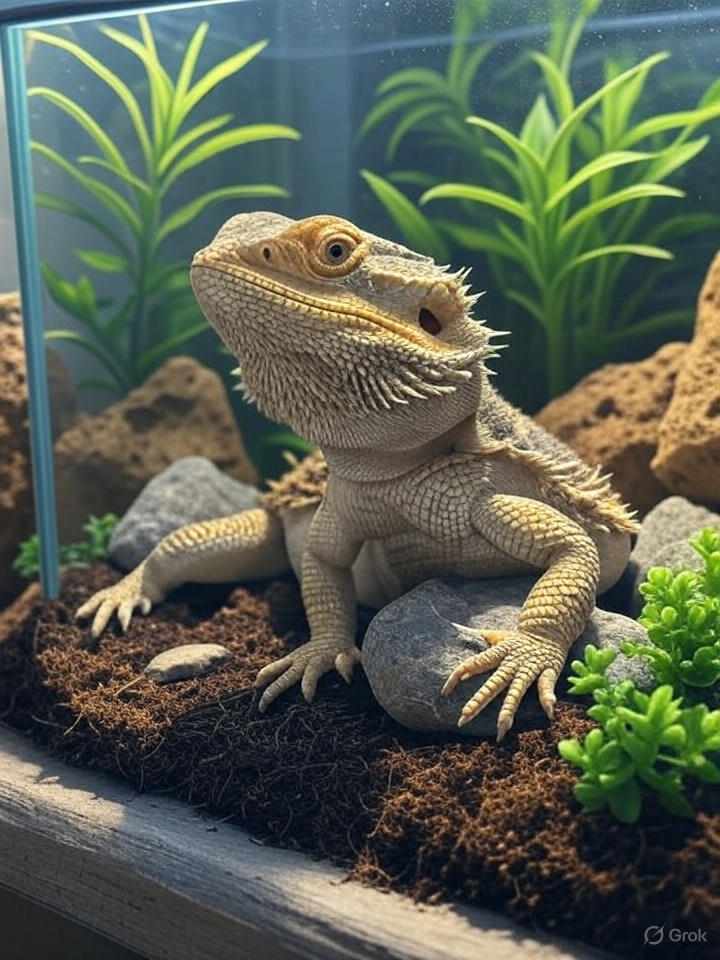
Bearded dragons, with their captivating charm and desert heritage from Australia, often surprise owners with their beard puffing behavior, a key aspect of bearded dragon care that reveals their needs and moods. This action—where they expand and darken their throat—serves purposes from defense to communication, enhancing your bond with them. Whether you’re a new owner or a seasoned enthusiast, understanding why bearded dragons puff up their beards helps ensure their well-being. Drawing from extensive reptile care expertise and behavioral insights, this guide explores the reasons and offers practical tips. Begin now to respond effectively to your dragon’s signals.
This article covers reasons for beard puffing, practical tips for owners, and conclusion. Start today to improve your dragon’s care.
Disclosure: This post contains affiliate links. I may earn a small commission from purchases made through these links at no additional cost to you (#CommissionsEarned).
Reasons for Beard Puffing
Defense and Intimidation
Bearded dragons puff up their beards as a defense mechanism when threatened, enlarging their appearance to deter predators or perceived dangers, with the beard darkening—often to black—for added effect, per a 2023 Journal of Herpetological Medicine and Surgery study (https://doi.org/10.5818/JHMS-D-22-00035). In captivity, loud noises or unwanted handling can trigger this wild instinct, signaling a need for safety.
Breeding Displays
During breeding season, bearded dragons puff up their beards as a display—males darken to jet-black to attract mates or assert dominance, while females may puff less aggressively, sometimes showing irritation, per the Reptile Centre (https://www.reptilecentre.com). This ritual peaks in spring to early summer, especially with other dragons present, reflecting hormonal shifts.
Stress and Discomfort
Stress or discomfort, from new environments, shedding, or inadequate hides, causes bearded dragons to puff up their beards, per a 2022 Reptile Medicine and Surgery study (https://doi.org/10.1016/j.jepm.2022.01.005). Frequent puffing with lethargy suggests issues—check tank conditions (75–85°F cool, 95–105°F warm) or health. Addressing these reduces stress-related puffing.
Normal Behaviors
Occasional beard puffing, without darkening, can be normal—stretching neck muscles, relieving ear pressure, or post-meal relaxation, especially morning basking, per reptile community insights. If brief and unaccompanied by distress, it’s likely routine, enhancing their comfort.
Practical Tips for Owners
Monitor Their Environment
Ensure a stress-free enclosure with ample space, hides, and proper temperatures (75–85°F cool, 95–105°F warm) to manage why bearded dragons puff up their beards, per veterinary guidelines (https://arav.site-ym.com/page/ReptileCareResources). Reduce loud noises or sudden changes, and address frequent black-beard puffing by adjusting conditions. Enhance your setup with thermometers on Amazon (https://amzn.to/4lku8DG).
Observe During Shedding
During shedding, puffing helps loosen skin—monitor for prolonged discomfort, offering a humid hide or light misting to ease it, per a 2021 Journal of Applied Animal Welfare Science study (https://doi.org/10.1080/10888705.2021.1872023). Ensure correct UVB and temperatures to support healthy shedding, reducing stress.
Watch for Health Signs
If puffing pairs with lethargy, appetite loss, or breathing issues, consult a vet, as it may indicate respiratory infections or digestive problems, per Veterinary Partner (https://veterinarypartner.vin.com). Regular checkups catch issues early, especially in babies adjusting to new homes. Enhance health monitoring with care kits on Amazon (https://amzn.to/4lku8DG).
Respect Their Space
After rehoming, allow adjustment time, avoiding forced handling if puffing signals aggression (e.g., hissing). Talk softly, offer food, and add enrichment like branches to build security, reducing stress-related puffing, per reptile community advice. Enhance your enclosure with enrichment items on Amazon (https://amzn.to/4lku8DG).
Conclusion: Enhance Care with Beard Puffing Insights
Understanding why bearded dragons puff up their beards—whether for defense, breeding, stress, or normalcy—improves bearded dragon care, deepening your connection and ensuring their well-being. Monitor their environment, assist during shedding, watch health, and respect their space to respond appropriately. Start assessing your dragon’s puffing today—click here to explore our blog for more care tips and join a community of owners for support. Join the reptile care community to share observations and refine your approach. Ensure your dragon thrives with thermometers, care kits, and enrichment items on Amazon (https://amzn.to/4lku8DG). Share your beard puffing stories in the comments and consult a veterinarian for tailored advice to keep your beardie flourishing.