
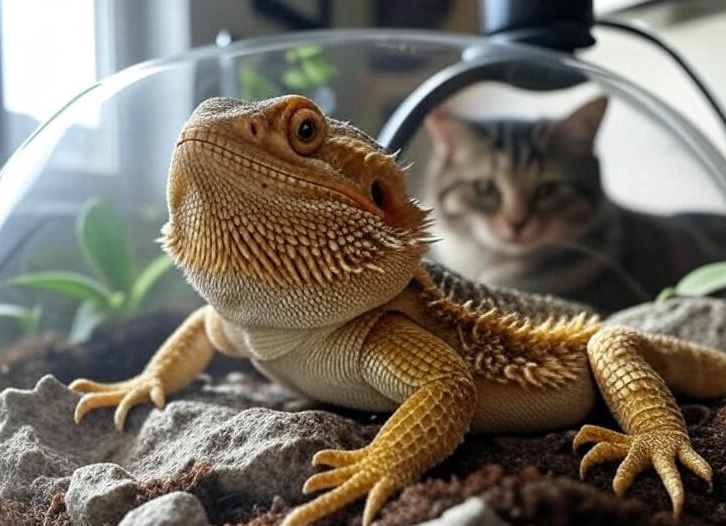
Bearded dragons are gentle, fascinating reptiles that make wonderful pets, but sharing a home with other animals like cats, dogs, or even birds can pose risks to their safety. Curious household pets may see your bearded dragon as a toy, a threat, or something to investigate, potentially leading to stress, injury, or worse. As a bearded dragon owner, ensuring your dragon’s environment is secure is crucial for their well-being. This guide covers practical steps to protect your bearded dragon from household pets, offering tips, product recommendations, and expert-backed advice to keep your scaly friend safe.
Whether you’re dealing with a playful puppy or a prowling cat, this post will walk you through enclosure security, supervision strategies, and ways to reduce stress for your bearded dragon. Let’s explore how to create a safe haven for your dragon while maintaining harmony in a multi-pet household.
Why Household Pets Can Be a Risk to Bearded Dragons
Bearded dragons are prey animals by nature, with instincts that make them sensitive to potential threats. Even well-meaning household pets can cause harm unintentionally. Cats, for example, may paw at a terrarium, causing stress or even knocking it over if it’s not secure. Dogs might bark or scratch at the enclosure, startling your dragon. Smaller pets like hamsters or birds could accidentally enter the enclosure, leading to territorial conflicts.
Stress from these interactions can weaken a bearded dragon’s immune system, leading to health issues like loss of appetite or lethargy. In rare cases, a determined pet could breach the enclosure, causing physical harm. According to Dr. Emily Rogers, a reptile veterinarian, “Consistent exposure to external stressors, like a cat staring into the tank, can elevate cortisol levels in bearded dragons, impacting their long-term health.” Understanding these risks is the first step to creating a safe environment.
Choosing a Secure Enclosure for Your Bearded Dragon
The foundation of protecting your bearded dragon is a sturdy, pet-proof enclosure. A well-designed terrarium acts as a physical barrier between your dragon and other household pets. Here are key features to look for:
- Durable Materials: Glass or high-quality PVC enclosures are ideal for withstanding curious paws or noses. Avoid flimsy plastic tanks that could crack under pressure.
- Lockable Lids: A secure lid prevents pets from accessing the enclosure. Look for terrariums with built-in locking mechanisms or add-on locks.
- Stable Base: Place the enclosure on a heavy, stable stand to prevent tipping if a pet jumps or leans against it.
As an Amazon Associate, I earn from qualifying purchases. A great option is the Exo Terra Glass Terrarium, which offers a robust glass structure, dual front doors for easy access, and a secure locking screen top. Owners love its durability, and it’s perfect for keeping nosy pets at bay. For extra security, consider adding the Zoo Med ReptiLock*, a reliable terrarium lock that ensures no pet can pry open the enclosure.
To compare enclosure options, here’s a quick table:
| Feature | Exo Terra Glass Terrarium | Basic Glass Tank |
|---|---|---|
| Material | High-quality glass | Standard glass |
| Locking Mechanism | Built-in lockable doors | Often none |
| Pet Resistance | High (sturdy, heavy) | Moderate |
| Ventilation | Excellent (screen top) | Varies |
For setup tips, use the Bearded Dragon Enclosure Calculator to ensure your terrarium meets your dragon’s size and age needs. Owners swear by this tool for creating tailored, pet-safe enclosures.
Securing the Enclosure Against Curious Pets
Even the best terrarium needs additional safeguards in a multi-pet household. Here are practical ways to fortify your bearded dragon’s home:
- Reinforce the Lid: A sturdy screen top, like the Fluker’s Metal Screen Cover*, prevents cats or dogs from pushing through flimsier lids. Its metal construction resists scratching and provides excellent ventilation.
- Elevate the Enclosure: Place the terrarium on a high, stable stand, out of reach of jumping pets. A height of at least 3 feet is ideal for most cats.
- Use Visual Barriers: Cover parts of the terrarium with non-toxic, reptile-safe backgrounds to reduce stress from pets staring inside. This also helps your dragon feel secure.
- Secure the Room: Keep the enclosure in a room with a lockable door or pet gate to limit access when you’re not supervising.
One time, my bearded dragon, Blaze, got spooked when my cat, Whiskers, jumped onto his terrarium stand. I added a Fluker’s screen cover and moved the tank to a higher shelf, which solved the issue. Blaze now lounges peacefully, unbothered by Whiskers’ curiosity.
Supervising Interactions Between Pets
While a secure enclosure is critical, supervision is equally important. Never assume your household pets will ignore the bearded dragon’s tank. Here’s how to manage interactions:
- Train Your Pets: Teach dogs commands like “leave it” to discourage them from approaching the terrarium. For cats, use deterrents like double-sided tape around the enclosure base to discourage climbing.
- Limit Access During Free Time: When your bearded dragon is out of the tank for handling, keep other pets in a separate room. This prevents sudden chases or aggressive reactions.
- Monitor Stress Signs: Watch for signs of stress in your dragon, like glass surfing, darkening colors, or hiding. If you notice these, reassess your pet management strategy.
Regular care routines help you spot issues early. The Bearded Dragon Care Checklist is a fantastic tool for tracking daily and weekly tasks, like checking enclosure security. It’s tailored to your dragon’s age, and owners love how it simplifies pet-safe routines.
Reducing Stress for Your Bearded Dragon
Even with a secure enclosure, the presence of other pets can stress your bearded dragon. Here are ways to create a calming environment:
- Provide Hides: Offer multiple hiding spots in the terrarium to give your dragon a safe retreat. The Zilla Vertical Decor* is a great choice, offering climbable structures that double as hides, keeping your dragon engaged and relaxed.
- Control Noise: Loud barking or sudden noises can startle your dragon. Place the enclosure in a quiet area of the home, away from high-traffic pet zones.
- Maintain Routine: Consistent feeding, lighting, and handling schedules help your dragon feel secure, even with other pets around.
Blaze loves his Zilla decor—it’s like his personal castle! When my dog gets rambunctious, Blaze retreats to his hide, and I can tell he feels safe.
Common Myths About Bearded Dragons and Household Pets
Let’s debunk a few misconceptions that can lead to unsafe practices:
- Myth: “Cats and bearded dragons can be friends.” While some cats may seem indifferent, their predatory instincts can kick in unexpectedly. Never allow unsupervised interactions.
- Myth: “A sturdy tank is enough protection.” Without locks or a secure lid, determined pets can find ways to access the enclosure.
- Myth: “Bearded dragons don’t get stressed by other pets.” Even if they appear calm, constant exposure to other animals can cause chronic stress.
Consulting with experts, like herpetologists, helps clarify these myths. BeardedBuddies.com collaborates with reptile specialists to ensure our advice is accurate and practical.
Conclusion: Creating a Safe Haven for Your Bearded Dragon
Protecting your bearded dragon from household pets requires a combination of a secure enclosure, vigilant supervision, and a stress-free environment. By choosing a sturdy terrarium like the Exo Terra Glass Terrarium, adding locks like the Zoo Med ReptiLock, and using tools like the Bearded Dragon Enclosure Calculator, you can create a safe space for your dragon. Regular monitoring and pet training further ensure harmony in your multi-pet home. Have tips for keeping your bearded dragon safe? Share them in the comments or ask about specific setups—we’d love to hear from you!
BeardedBuddies.com collaborates with reptile experts to provide accurate, trustworthy care advice. This site participates in the Amazon Associates Program, earning from qualifying purchases.
About the Author
Dragon King is the founder of BeardedBuddies.com and a dedicated reptile enthusiast with over seven years of experience caring for bearded dragons. His dragon, Blaze, once had a close call when a curious kitten tried to paw at his terrarium, inspiring Dragon King to research pet-proofing solutions. Now, he shares practical, expert-backed advice to help owners worldwide keep their dragons safe. All tips are vetted with herpetologists to ensure accuracy, making BeardedBuddies.com a trusted resource for reptile lovers.