
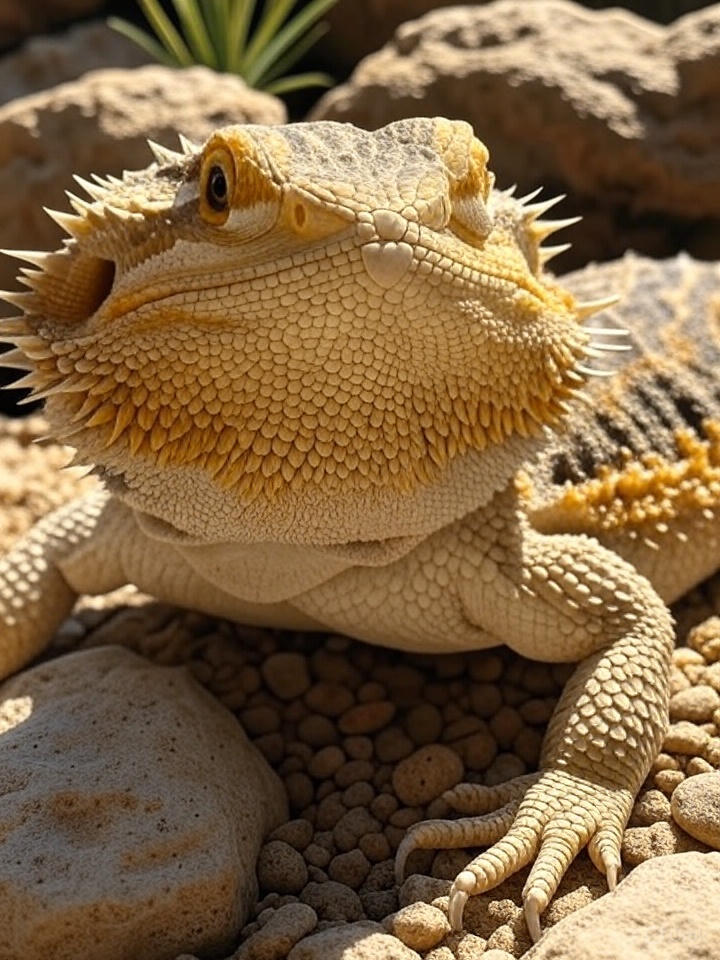
Bearded dragons thrive in a carefully controlled environment that mimics their native Australian desert habitat. Maintaining stable temperatures in their tank is crucial for their health, supporting everything from digestion to activity levels. Fluctuations or incorrect temperatures can lead to stress, poor appetite, or serious conditions like metabolic bone disease. In this guide, we’ll walk through how to set up and maintain consistent temperature gradients, troubleshoot issues, and ensure your dragon’s tank stays just right. Whether you’re a new owner or refining your setup, these tips will keep your scaly friend comfortable and healthy.
Why Stable Temperatures Are Critical for Bearded Dragons
Bearded dragons are ectothermic, meaning they rely on external heat sources to regulate their body temperature. A tank with stable, appropriate temperature zones allows them to thermoregulate by moving between warm and cool areas. Incorrect or unstable temperatures can disrupt digestion, weaken immunity, or cause stress. Dr. Stephanie Nelk, a reptile veterinarian, explains, “Consistent temperature gradients are essential for bearded dragons to maintain metabolic functions and avoid health complications.” By mastering temperature control, you’ll create a thriving environment for your dragon.
Understanding Temperature Zones in a Bearded Dragon Tank
To maintain stable temperatures, you need to create distinct zones within the tank:
| Zone | Temperature Range | Purpose | Recommended Product |
|---|---|---|---|
| Basking Spot | 95-110°F (adults), 100-115°F (juveniles) | Supports digestion and activity | Exo Terra Basking Spot Lamp |
| Warm Side | 85-90°F | General activity area | Zoo Med ReptiTemp Rheostat |
| Cool Side | 75-80°F | Resting and cooling off | Fluker’s Digital Thermometer/Hygrometer |
| Nighttime | 65-75°F | Promotes restful sleep | Fluker’s Ceramic Heat Emitter |
- Basking Spot: A hot area where your dragon can warm up, created by an Exo Terra Basking Spot Lamp.
- Warm Side: A slightly cooler area for general activity, maintained with a Zoo Med ReptiTemp Rheostat for precise control.
- Cool Side: A cooler area for resting, monitored with a Fluker’s Digital Thermometer/Hygrometer.
- Nighttime: A stable, cooler range using a Fluker’s Ceramic Heat Emitter if temperatures drop too low.
As an Amazon Associate, I earn from qualifying purchases. Products like the Exo Terra Basking Spot Lamp and Fluker’s Ceramic Heat Emitter are trusted by owners for reliable temperature stability.
How to Set Up a Temperature-Stable Tank
Follow these steps to achieve and maintain consistent temperatures:
- Choose the Right Heat Sources:
- Use an Exo Terra Basking Spot Lamp for daytime basking (95-110°F for adults, 100-115°F for juveniles). Adjust wattage based on tank size (e.g., 50-75W for a 40-gallon tank).
- For nighttime, use a Fluker’s Ceramic Heat Emitter to maintain 65-75°F without emitting light, preserving the dark cycle.
- Combine with a Zoo Med ReptiSun UVB Bulb to support health and contribute to daytime warmth.
- Use a Rheostat for Control: A Zoo Med ReptiTemp Rheostat allows you to adjust heat output to prevent overheating or underheating, ensuring stability.
- Monitor Temperatures: Place a Fluker’s Digital Thermometer/Hygrometer in both the basking and cool zones to track temperatures and humidity (20-40%). Check readings twice daily.
- Create a Gradient: Position the Exo Terra Basking Spot Lamp at one end of the tank and leave the opposite end unheated to create a cool side. Use flat rocks or logs under the basking light to retain heat.
- Insulate the Tank: Place the tank away from drafts, windows, or air conditioning vents to avoid sudden temperature drops. Use tank insulation or a solid background if needed.
For a tailored setup, try the Bearded Dragon Enclosure Calculator. Owners swear by this tool for generating precise heating and lighting recommendations based on your dragon’s age and tank size.
Troubleshooting Temperature Fluctuations
If temperatures are unstable, address these common issues:
- Overheating: If the basking spot exceeds 110°F, lower the wattage of the Exo Terra Basking Spot Lamp or raise it higher. Use a Zoo Med ReptiTemp Rheostat to fine-tune heat.
- Underheating: If the cool side drops below 75°F or nighttime temperatures fall below 65°F, add a Fluker’s Ceramic Heat Emitter or increase the basking lamp wattage.
- Inconsistent Readings: Ensure your Fluker’s Digital Thermometer/Hygrometer is placed correctly (not directly under the heat source) and calibrate it regularly.
- External Factors: Check for drafts or room temperature changes. Move the tank to a stable location if needed.
The Bearded Dragon Care Checklist helps you track daily temperature checks and maintenance tasks, ensuring stability.
Common Mistakes to Avoid
Avoid these pitfalls to maintain consistent temperatures:
- Using Incorrect Bulbs: Standard household bulbs don’t provide the right heat or UVB. Stick with the Zoo Med ReptiSun UVB Bulb and Exo Terra Basking Spot Lamp.
- Skipping Monitoring: Without regular checks, temperatures can drift. Use a Fluker’s Digital Thermometer/Hygrometer daily.
- Overloading Heat Sources: Too many heat devices can cause spikes. A Zoo Med ReptiTemp Rheostat prevents this.
- Ignoring Nighttime Needs: Cold nights stress dragons. A Fluker’s Ceramic Heat Emitter ensures safe nighttime temperatures.
Myths About Bearded Dragon Tank Temperatures
Let’s debunk some common misconceptions:
- Myth: “Bearded dragons don’t need heat at night.” Fact: Nighttime temperatures below 65°F can harm dragons. Use a Fluker’s Ceramic Heat Emitter if needed.
- Myth: “Any thermometer works.” Fact: Only accurate devices like the Fluker’s Digital Thermometer/Hygrometer ensure precise readings.
- Myth: “Hotter is always better.” Fact: Overheating can cause burns or stress. A Zoo Med ReptiTemp Rheostat maintains safe levels.
Conclusion
Maintaining stable temperatures in a bearded dragon tank is essential for their health and comfort. By using reliable products like the Exo Terra Basking Spot Lamp, Fluker’s Ceramic Heat Emitter, and Fluker’s Digital Thermometer/Hygrometer, and fine-tuning with a Zoo Med ReptiTemp Rheostat, you can create a perfect desert-like environment. Tools like the Bearded Dragon Enclosure Calculator simplify setup and maintenance. How do you keep your dragon’s tank stable? Share your tips or ask for advice in the comments!
About the Author
I’m Dragon King, founder of BeardedBuddies.com and a reptile enthusiast with over seven years raising bearded dragons. My dragon, Blaze, once struggled with chilly nights until I added a Fluker’s Ceramic Heat Emitter and monitored with a Fluker’s Digital Thermometer/Hygrometer. I collaborate with herpetologists to share practical, trustworthy advice for dragon owners worldwide. All my tips are based on consultations with reptile experts and standard care practices.
BeardedBuddies.com collaborates with reptile experts to provide accurate, trustworthy care advice. This site participates in the Amazon Associates Program, earning from qualifying purchases.