
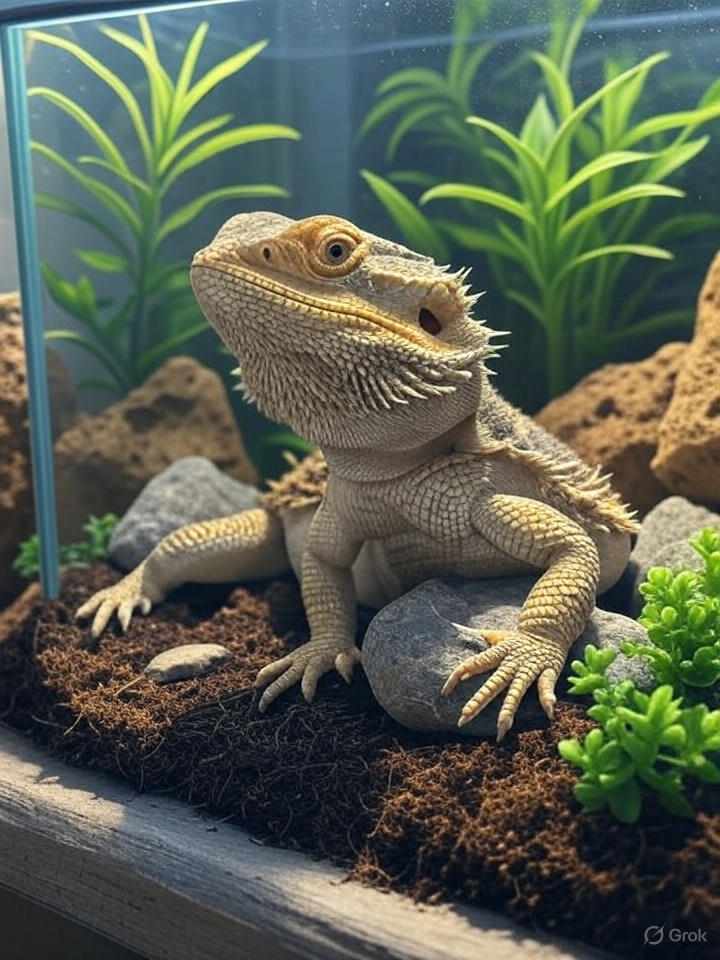
Bearded dragons, with their captivating charm and desert heritage, require specific environmental conditions to stay healthy, and maintaining optimal humidity for bearded dragons—ideally 30–40%—is essential to prevent respiratory infections or skin problems. Seasonal shifts, like humid summers or dry winters, demand adaptive care to replicate their natural habitat. Whether you’re a new owner or a seasoned enthusiast, this article offers practical tips enriched with habitat insights. Begin now to ensure your dragon’s year-round comfort.
This article covers humidity understanding, monitoring techniques, lowering humidity, raising humidity, seasonal considerations, and conclusion. Start today to perfect your dragon’s environment.
Disclosure: This post contains affiliate links. I may earn a small commission from purchases made through these links at no additional cost to you (#CommissionsEarned).
Understanding Optimal Humidity
Bearded dragons thrive in their native 30–40% humidity, per Bearded Dragons World (https://beardeddragonsworld.com/humidity-for-bearded-dragons/), avoiding respiratory issues from excess moisture or dehydration from dryness. Use a digital hygrometer centrally in the enclosure for accurate readings, as analog models are less reliable.
Monitoring Humidity Levels
Check humidity multiple times daily with a digital hygrometer, noting night rises to 50–60% (cooler air holds less moisture), which are safe, per Bearded Dragons World (https://beardeddragonsworld.com/humidity-for-bearded-dragons/). Keep day levels below 40%—place the probe on the back center wall for best results.
Lowering Humidity in Humid Seasons
In summer’s high humidity, increase ventilation with a mesh top or vents on opposite sides, relocate the water dish to the cool side, use a room dehumidifier if needed, and opt for dry substrates like reptile carpet, per Bearded Dragon Forum (https://www.beardeddragon.org/threads/what-is-the-ideal-humidity-for-a-bearded-dragon-and-how-do-i-maintain-it.266610/). Maintain 75–85°F cool, 85–105°F basking. Enhance your setup with vent kits on Amazon (https://amzn.to/4lku8DG).
Raising Humidity in Dry Seasons
In winter’s dry air, lightly mist with purified water on plants/walls (not the dragon), add a shallow water dish in a low-heat area, include non-toxic live plants like pothos, or use a room humidifier, per Reptile Direct (https://reptiledirect.com/bearded-dragon-humidity/). Avoid exceeding 40%—monitor closely. Enhance your care with misting tools on Amazon (https://amzn.to/4lku8DG).
Seasonal Considerations and Local Climate
Adapt to local climates—humid summers need dehumidification, dry winters require humidification. Australia’s outback sees morning humidity peaks, informing the 30–40% target, per Bearded Dragons World (https://beardeddragonsworld.com/humidity-for-bearded-dragons/). Anticipate shifts with weather patterns.
| Season | Common Issue | Adjustment Strategies |
|---|---|---|
| Summer | High humidity | Increase ventilation, use dehumidifier |
| Winter | Low humidity | Light misting, add water dish |
Conclusion: Master Humidity for Your Dragon
Maintaining optimal humidity for bearded dragons at 30–40% year-round prevents health issues, adapting to seasonal changes with ventilation in summer or misting in winter. Ensure your dragon thrives with vent kits and misting tools on Amazon (https://amzn.to/4lku8DG). Share your humidity experiences in the comments and consult a veterinarian for tailored advice to keep your beardie flourishing.