
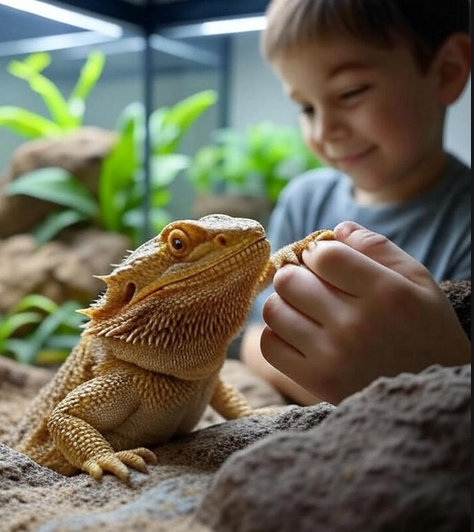
Bearded dragons have become a favorite among families looking to introduce their children to pet ownership. With their calm demeanor, unique appearance, and manageable size, these reptiles often spark curiosity in kids. But are bearded dragons truly a good fit for young owners? The answer depends on a family’s commitment to their care and the level of parental supervision available. Bearded dragons can be excellent pets for kids, teaching responsibility and empathy, but they require specific attention to thrive. This guide explores their suitability for children, key considerations, practical tips, and common myths to help parents make an informed decision.
Why Bearded Dragons Are Kid-Friendly
Bearded dragons, often called “beardies,” stand out for their gentle temperament, making them one of the most approachable reptiles for kids. Unlike skittish pets that shy away from touch, beardies typically tolerate handling, which appeals to children eager to interact with their pet. Their expressive behaviors, like puffing their “beard” when curious or stressed, fascinate young minds. I remember when my bearded dragon, Blaze, puffed up at a shiny toy car my son rolled near his tank—a moment that sparked a lively discussion about what makes dragons tick.
At 16-24 inches as adults, bearded dragons are a practical size for kids to handle with guidance, unlike smaller, more fragile pets like hamsters. Their diurnal nature means they’re active during the day, aligning with a child’s schedule, unlike nocturnal animals that sleep through playtime. Feeding them is another draw—kids love offering a mix of insects and chopped veggies, turning daily care into a fun ritual. Dr. Emily Carter, a reptile veterinarian with over 10 years of experience, notes, “Bearded dragons are a great choice for families because their care requirements, while specific, are straightforward with proper setup and guidance.” This blend of interactivity and manageable needs makes them a strong candidate for kids.
Challenges of Bearded Dragons for Young Owners
While bearded dragons are kid-friendly, they’re not a low-effort pet. Parents must consider several factors to ensure a positive experience. Age is a key factor—children under 12 typically need adult supervision for handling and care tasks to prevent stress to the dragon or accidents. Younger kids may struggle with the patience required for gentle handling or the consistency needed for daily maintenance.
The setup is another consideration. Bearded dragons need a vivarium with precise lighting, heating, and humidity levels to stay healthy. A starter kit like the Zoo Med ReptiHabitat Bearded Dragon Kit* simplifies this for families, providing a tank, UVB lighting, and substrate tailored for beardies. As an Amazon Associate, I earn from qualifying purchases. This kit takes the guesswork out of creating a safe environment, which is crucial for kids new to reptile care.
Feeding requires attention to detail. Bearded dragons need a balanced diet of live insects, vegetables, and supplements like Repti Calcium with D3 (3oz)* to prevent nutritional deficiencies. Kids can help with feeding, but parents must ensure insects are gut-loaded and dusted properly. Using an Exo Terra Feeding Dish, Large* or Fluker’s Repta Bowl, Large 9″* keeps feeding tidy, reducing mess that might overwhelm a child. Hygiene is non-negotiable—bearded dragons can carry salmonella, so kids must wash their hands thoroughly after handling or cleaning. Finally, the time commitment—daily feeding, weekly tank cleaning, and regular health checks—teaches responsibility but may require parental support for younger children.
Bearded Dragons vs. Other Kid-Friendly Pets
To help parents decide if a bearded dragon is the right pet, let’s compare them to other common options for kids. The table below highlights key differences:
| Pet | Temperament | Care Level | Kid Interaction | Lifespan | Cost |
|---|---|---|---|---|---|
| Bearded Dragon | Docile, enjoys handling | Moderate (tank setup, diet) | High (handling, feeding) | 8-12 years | Moderate-High |
| Leopard Gecko | Calm, less interactive | Low-Moderate | Moderate (gentle handling) | 10-20 years | Low-Moderate |
| Hamster | Skittish, may bite | Low (cage cleaning) | Low (nocturnal, fragile) | 2-3 years | Low |
| Goldfish | Non-interactive | Low (tank maintenance) | Low (observation only) | 10-15 years | Low |
Bearded dragons offer a unique balance of interactivity and moderate care needs, but their longer lifespan and higher setup costs set them apart from hamsters or goldfish. Leopard geckos are a close alternative, requiring less space but offering less hands-on engagement. This comparison helps families align their choice with their child’s interests and their budget.
Practical Tips for Kids and Bearded Dragons
To make a bearded dragon a great pet for your child, consider these actionable tips:
- Simplify the Setup: Start with a Zoo Med ReptiHabitat Bearded Dragon Kit* to create a safe, comfortable home for the dragon. It includes essentials like a tank, lighting, and substrate, making it easier for families to get started.
- Teach Gentle Handling: Show kids how to support the dragon’s body and avoid pulling the tail. Supervise early interactions to build confidence. Blaze loves chilling on my daughter’s shoulder, but we practiced slow, gentle movements to keep him calm.
- Make Feeding Fun: Let kids chop veggies or place insects in an Exo Terra Feeding Dish, Large. Dusting insects with Repti Calcium with D3 (3oz) is a simple task older kids can manage with oversight, fostering responsibility.
- Build a Routine: Create a schedule for feeding, watering, and cleaning. A Fluker’s Repta Bowl, Large 9″* for water minimizes spills, making it easier for kids to help maintain the tank.
- Emphasize Hygiene: Enforce hand-washing after every interaction to prevent salmonella risks. Make it a game for younger kids to ensure compliance.
- Watch for Health Signs: Teach kids to notice stress signals, like a darkened beard or reduced appetite, and involve them in vet visits to build empathy and awareness.
Busting Myths About Bearded Dragons and Kids
Misinformation can cloud the decision to get a bearded dragon. Here are some common myths debunked:
- Myth: Bearded dragons are unsafe for kids.
Reality: Their docile nature makes them one of the safest reptiles, with bites being rare and minor. Supervision ensures safe handling. - Myth: They’re as easy as a goldfish.
Reality: Bearded dragons need specific lighting, heating, and diet, but a proper setup simplifies care for families. - Myth: Kids get bored quickly.
Reality: Behaviors like arm-waving or head-bobbing keep kids engaged, especially when they’re involved in feeding and care.
Conclusion
Bearded dragons can be fantastic pets for kids, offering a unique blend of interactivity, manageable care, and educational opportunities. Their calm nature and engaging behaviors make them a hit with children, while their care requirements teach responsibility. However, adult supervision is essential, especially for younger kids, to ensure proper handling, hygiene, and habitat maintenance. By setting up a proper environment with tools like the Zoo Med ReptiHabitat Bearded Dragon Kit, Exo Terra Feeding Dish, Large, Repti Calcium with D3 (3oz), or Fluker’s Repta Bowl, Large 9″, families can create a rewarding experience. Have a bearded dragon at home? Share your tips for involving kids in their care in the comments below!
About the Author
Dragon King is the founder of BeardedBuddies.com and a passionate reptile enthusiast with over seven years of experience raising bearded dragons. His dragon, Blaze, once knocked over a water bowl during a particularly enthusiastic head-bob, teaching Dragon King the value of sturdy dishes for kid-friendly care. Collaborating with herpetologists and veterinarians, Dragon King shares practical, trustworthy advice to help families enjoy their scaly companions. All advice is based on consultations with reptile experts and standard care practices.
BeardedBuddies.com collaborates with reptile experts to provide accurate, trustworthy care advice. This site participates in the Amazon Associates Program, earning from qualifying purchases.