
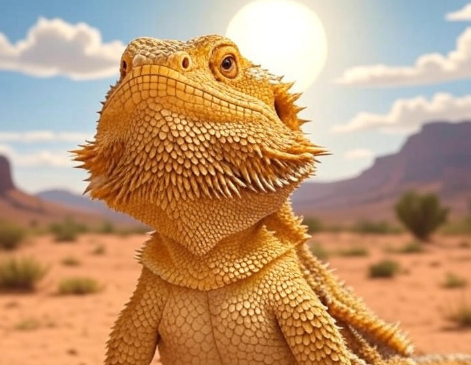
Bearded dragons, native to Australia’s arid and semi-arid regions, face growing challenges from climate change in their wild habitats. Rising temperatures, altered rainfall, and habitat loss threaten their survival, while captive dragons rely on us to replicate their natural conditions. Understanding these impacts helps owners provide better care and supports conservation efforts. This guide explores how climate change affects bearded dragon habitats, their adaptations, and how to mimic stable conditions at home. Let’s protect these remarkable reptiles.
Climate Change and Bearded Dragon Habitats
Bearded dragons (Pogona species) thrive in Australia’s deserts, woodlands, and scrublands, relying on stable temperatures (75-100°F), low humidity (20-40%), and abundant basking sites. Climate change disrupts these conditions:
- Rising Temperatures: Studies predict Australia’s arid regions could see temperature increases of 2-5°C by 2050, pushing basking sites beyond safe limits (>100°F), causing heat stress.
- Altered Rainfall: Increased droughts or unseasonal rains affect insect populations, reducing food availability for omnivorous dragons.
- Habitat Loss: Deforestation and urbanization, worsened by climate-driven fires, shrink their range. The IUCN notes some Pogona species face population declines.
- UVB Changes: Shifts in cloud cover may alter UVB exposure, critical for vitamin D3 synthesis.
In captivity, owners can mimic stable habitats with a Zoo Med ReptiSun UVB Bulb* to ensure consistent UVB. As an Amazon Associate, I earn from qualifying purchases.
Impacts on Wild Bearded Dragons
Climate change poses specific threats:
- Heat Stress: Prolonged temperatures above 100°F can impair thermoregulation, leading to dehydration or lethargy.
- Food Scarcity: Reduced insect populations (e.g., crickets, termites) and vegetation limit nutrition, impacting growth and reproduction.
- Reproductive Challenges: Warmer nests can skew sex ratios, as bearded dragon eggs are temperature-sex determined (higher temperatures produce males).
- Habitat Fragmentation: Fires and development isolate populations, reducing genetic diversity.
Adapting Captive Care to Climate Insights
To support bearded dragons in captivity, replicate their natural, stable conditions:
- UVB Lighting: Use a Zoo Med ReptiSun UVB Bulb* to provide a UVI of 4.0-6.0, mimicking wild sunlight.
- Temperature Control: Maintain basking spots at 95-100°F and cool sides at 75-85°F with an Exo Terra Digital Thermometer*.
- Diet Stability: Offer a balanced diet of insects and greens in a Fluker’s Repta-Bowl, dusted with Zoo Med Repti Calcium to counter food scarcity effects.
- Humidity: Keep humidity at 30-40% to reflect arid origins, using a hygrometer.
The Bearded Dragon Enclosure Calculator helps replicate wild conditions. Owners swear by its tailored recommendations for UVB and temperature based on tank size.
Supporting Conservation Efforts
Climate change threatens wild bearded dragons, but you can help:
- Support Conservation Groups: Donate to organizations like the Australian Reptile Park, which protect native habitats.
- Raise Awareness: Share posts on social media with #ReptileConservation to highlight climate impacts.
- Responsible Ownership: Avoid releasing pet dragons, which can harm ecosystems. Use a Fluker’s Repta-Bowl* for clean feeding to prevent waste.
Challenges for Captive Dragons
Climate change can indirectly affect pet dragons:
- Supply Chain Issues: Droughts may reduce insect availability, increasing costs. Stock up on quality feed.
- Temperature Spikes: Hotter summers require vigilant monitoring with an Exo Terra Digital Thermometer*.
- Health Needs: Stress from environmental shifts may require vet checks. Consult experts like Dr. Stephanie Nelk.
Myths About Climate and Bearded Dragons
- Myth: Climate change only affects wild dragons.
Truth: It impacts captive care through supply and temperature challenges. - Myth: Bearded dragons can adapt to any temperature.
Truth: They need specific ranges (95-100°F) to thrive. - Myth: UVB isn’t affected by climate.
Truth: Changing cloud cover alters wild UVB exposure, requiring careful replication in captivity.
Conclusion: Protect Your Dragon’s Habitat
Climate change threatens bearded dragon habitats with rising temperatures, food scarcity, and habitat loss. In captivity, tools like the Zoo Med ReptiSun UVB Bulb* and Exo Terra Digital Thermometer* help mimic stable conditions, while the Bearded Dragon Enclosure Calculator ensures precision. Support conservation and share your thoughts on climate impacts in the comments—I’d love to hear how you’re helping your dragon thrive!
BeardedBuddies.com collaborates with reptile experts to provide accurate, trustworthy care advice. This site participates in the Amazon Associates Program, earning from qualifying purchases.
About the Author
Dragon King, founder of BeardedBuddies.com, has raised bearded dragons for over seven years. Inspired by his dragon, Blaze, he advocates for habitat protection. Working with experts like Dr. Stephanie Nelk, a reptile veterinarian, he shares tips to adapt care to environmental challenges. All advice is based on consultations with herpetologists and standard reptile care practices.