
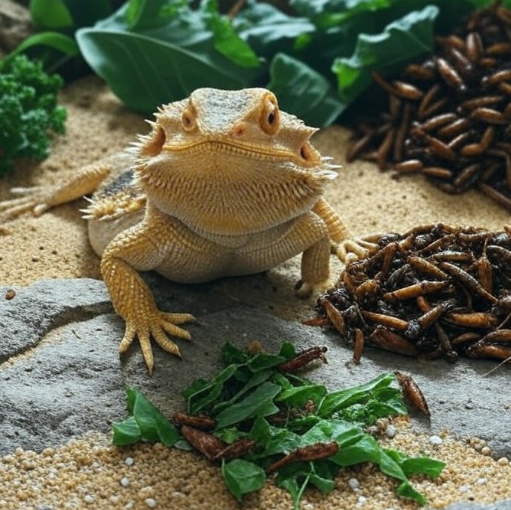
Imagine opening your cricket container to feed your bearded dragon, only to find a few crickets have stopped hopping. Or maybe you’re considering those convenient bags of freeze-dried crickets at the pet store. It’s a common question among bearded dragon owners: Can bearded dragons eat dead crickets? In this guide, we’ll explore the safety, nutrition, and practical tips for feeding dead crickets to keep your scaly buddy thriving. Let’s get started!
Why Live Crickets Are a Bearded Dragon’s Go-To Meal
Bearded dragons are natural hunters, and live crickets are a dietary staple for good reason. They’re packed with nutrients: about 20.5% protein, 69.2% moisture, 6.8% fat, and key minerals like calcium and phosphorus. For baby dragons, insects make up roughly 80% of their diet to support growth, while adults shift to about 20% insects and 80% greens. Chasing live crickets also keeps your dragon active and mentally engaged, mimicking their wild hunting instincts.
But what about when those crickets aren’t moving? Whether they died in the container or you’re eyeing store-bought options, there are important factors to consider. Let’s break it down.
The Risks of Feeding Naturally Dead Crickets
If you find crickets that died naturally—perhaps from old age, illness, or a rough delivery—don’t feed them to your dragon. Here’s why:
- Nutrient Loss: Once a cricket dies, it loses moisture quickly, which strips away proteins, fats, and vitamins. This makes them far less nutritious for your dragon.
- Bacterial Dangers: Dead crickets can harbor bacteria like Salmonella or E. coli, which can cause serious illness in your dragon. Symptoms like vomiting, diarrhea, or a blackened beard (a stress signal) have been linked to eating naturally dead crickets.
- Toxins and Parasites: Crickets exposed to pesticides (like household bug sprays) or carrying parasites can pass those dangers to your dragon, potentially leading to severe health issues.
To stay safe, toss out any crickets that died on their own. For more on safe feeding, check out our post on safe insects for bearded dragons.
Are Freeze-Dried or Canned Crickets a Safe Alternative?
As an Amazon Associate, I earn from qualifying purchases.
If live crickets aren’t available, commercially prepared options like Fluker’s Freeze-Dried Crickets* can be a handy backup. These are processed to eliminate bacteria, making them safer than naturally dead crickets. However, they have some drawbacks:
- Reduced Nutrition: Freeze-dried or canned crickets lose moisture and some nutrients during processing, making them less hydrating and nutrient-dense than live, gut-loaded crickets (ones fed nutritious foods before feeding).
- Picky Eaters: Dragons are wired to chase moving prey, so they might ignore still crickets. Try wiggling them with tongs or placing them in an Exo Terra Feeding Dish* with veggies to spark interest.
These are best used sparingly, not as a daily meal. Owners love the Bearded Dragon Care Checklist for tracking feeding schedules to ensure a balanced diet, especially when pairing with supplements like Zoo Med Repti Calcium*.
How Dead Crickets Affect Your Dragon’s Behavior
Live crickets do more than feed your dragon—they keep them engaged. Hunting satisfies natural instincts, promoting physical and mental health, especially in young dragons. Feeding only dead crickets might lead to boredom or reduced activity. To mimic the chase, try moving Fluker’s Freeze-Dried Crickets* with tongs or hiding them in greens like Zilla Reptile Munchies Vegetable Mix*. If your dragon seems stressed or less active, our guide on bearded dragon black beard causes can help you spot potential issues.
Alternatives to Dead Crickets
If dead crickets aren’t the best choice, what else can you feed your dragon? Live insects like dubia roaches, mealworms (in moderation), or gut-loaded crickets are excellent options. For veggies, offer collard greens, kale, or bell peppers, especially for adults who need more plants. Always remove uneaten insects from the tank—live ones can bite your dragon, and dead ones can rot and attract bacteria. For more feeding ideas, see our baby bearded dragon diet tips.
Practical Tips for Feeding Crickets Safely
Here are some tips to make feeding safe and easy:
- Store Live Crickets Right: Keep them in a ventilated container with food like carrots or oats to gut-load them, boosting their nutrition.
- Clean the Tank: Remove uneaten crickets (live or dead) to prevent bites or bacterial growth.
- Supplement Nutrition: Dust insects with Zoo Med Repti Calcium* to avoid deficiencies. Learn more in our post on preventing nutritional deficiencies in bearded dragons.
- Encourage Eating: For Fluker’s Freeze-Dried Crickets, wiggle them with tongs or place them in an Exo Terra Feeding Dish with veggies.
Quick Comparison: Live vs. Dead Crickets
Here’s a mobile-friendly table to help you decide:
| Aspect | Live Crickets | Naturally Dead | Freeze-Dried/Canned |
|---|---|---|---|
| Nutrition | High | Low | Moderate |
| Health Risks | Low | High | Low |
| Behavior | Encourages hunting | May bore dragon | May need tricks |
| Best Use | Main food source | Not recommended | Emergency backup |
Wrapping It Up
So, can bearded dragons eat dead crickets? Naturally dead ones are a no-go due to nutrient loss and risks like bacterial contamination. Fluker’s Freeze-Dried Crickets* are a safer backup but should be used sparingly, as live crickets are best for nutrition and engagement. Pair insects with supplements like Zoo Med Repti Calcium* and veggies like Zilla Reptile Munchies Vegetable Mix* for a balanced diet. Got a feeding trick that works for your dragon? Share it in the comments!
BeardedBuddies.com collaborates with reptile experts to provide accurate, trustworthy care advice. This site participates in the Amazon Associates Program, earning from qualifying purchases.
About the Author
Dragon King, founder of BeardedBuddies.com, has been a bearded dragon enthusiast for over seven years. His dragon, Blaze, once ignored Fluker’s Freeze-Dried Crickets* until Dragon King dangled them with tongs, sparking Blaze’s hunting instinct! Working with herpetologists, Dragon King shares practical advice to help bearded dragon owners worldwide keep their pets healthy and happy.