
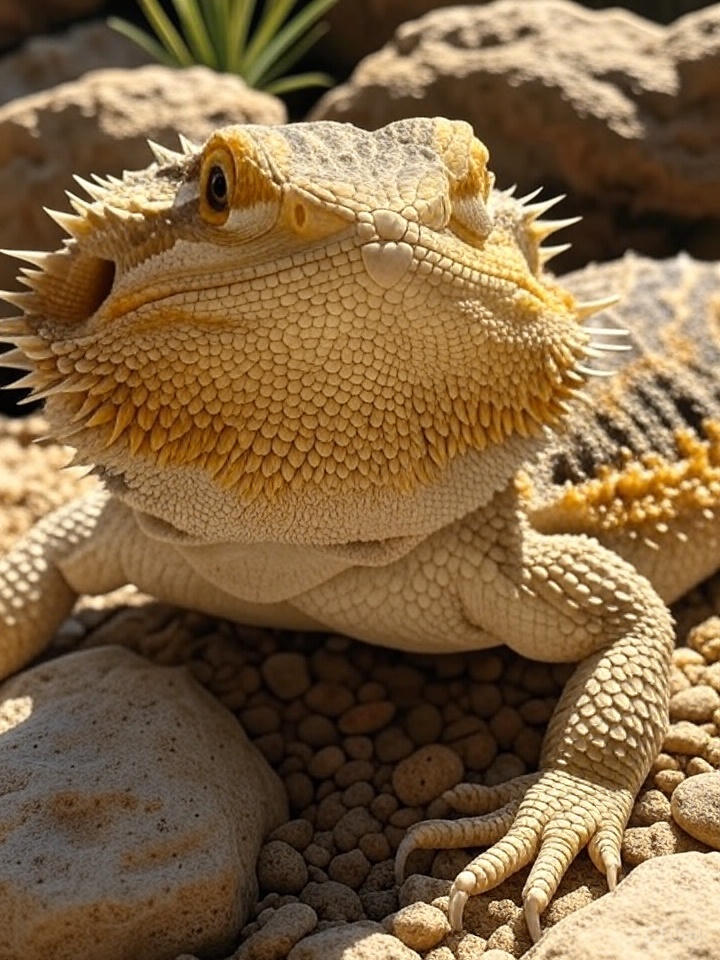
Bearded dragons, with their captivating charm and desert heritage from Australia, are fascinating reptiles whose unique genetic traits, recently explored in bearded dragon genetic research, offer insights into evolutionary biology, particularly their sex determination system. Unlike many animals, they can switch sex based on environmental factors, relevant to climate change adaptation studies. Whether you’re a pet owner or an enthusiast, this guide delves into the latest discoveries on sex determination mechanisms, behavioral implications, and care insights. Begin now to appreciate the science behind your scaly companion.
This article covers temperature-dependent sex determination, molecular mechanisms, behavioral traits, climate change implications, applications for owners, and conclusion. Start today to deepen your understanding.
Disclosure: This post contains affiliate links. I may earn a small commission from purchases made through these links at no additional cost to you (#CommissionsEarned).
Temperature-Dependent Sex Determination
Bearded dragon genetic research reveals temperature-dependent sex determination (TSD), where high incubation temperatures (around 34°C+) turn genetically male (ZZ) embryos into functional females, despite ZW producing females, per Phys.org (https://phys.org/news/2021-04-bearded-dragon-embryos-females-sex.html). These sex-reversed females can reproduce, producing male offspring that develop as females under heat, reflecting an ancestral reptile trait. Enhance your incubation setup with temperature tools on Amazon (https://amzn.to/4lku8DG).
Molecular Mechanisms Behind Sex Reversal
Studies show RNA editing and differential intron retention in jumonji genes drive sex reversal at high temperatures, altering gene expression to override genetic sex, per Science News (https://www.sciencenews.org/article/how-bearded-dragons-switch-their-sex) and Treehugger (https://www.treehugger.com/bearded-dragon-facts-6560979). This genetic-environment interplay shapes their development.
Behavioral Traits of Sex-Reversed Dragons
Sex-reversed females blend male traits—longer tails, boldness, male-like basking—per a 2016 study (https://pmc.ncbi.nlm.nih.gov/articles/PMC4920310/), potentially influencing wild population dynamics through altered competition or mating.
Implications for Climate Change
Rising temperatures may skew sex ratios toward females, aiding adaptation but posing long-term population risks, per National Geographic (https://www.nationalgeographic.com/science/article/hot-wild-dragons-set-sex-through-temperature-not-genes). Ongoing research assesses their resilience to rapid climate shifts.
Applications for Pet Owners
For bearded dragon genetic research benefits, maintain 28–31°C incubation for balanced sex ratios during breeding, and tailor care for sex-reversed dragons—more space for activity or monitoring male-like aggression. Enhance your care with breeding supplies on Amazon (https://amzn.to/4lku8DG).
Conclusion: Embrace Genetic Insights for Care
Bearded dragon genetic research highlights their temperature-driven sex switch, driven by RNA and gene activity, offering evolutionary and climate insights. Owners can apply this to breeding and care, ensuring healthy pets. Ensure your dragon thrives with temperature tools and breeding supplies on Amazon (https://amzn.to/4lku8DG). Share your genetic observations in the comments and consult a veterinarian for tailored advice to keep your beardie flourishing.