
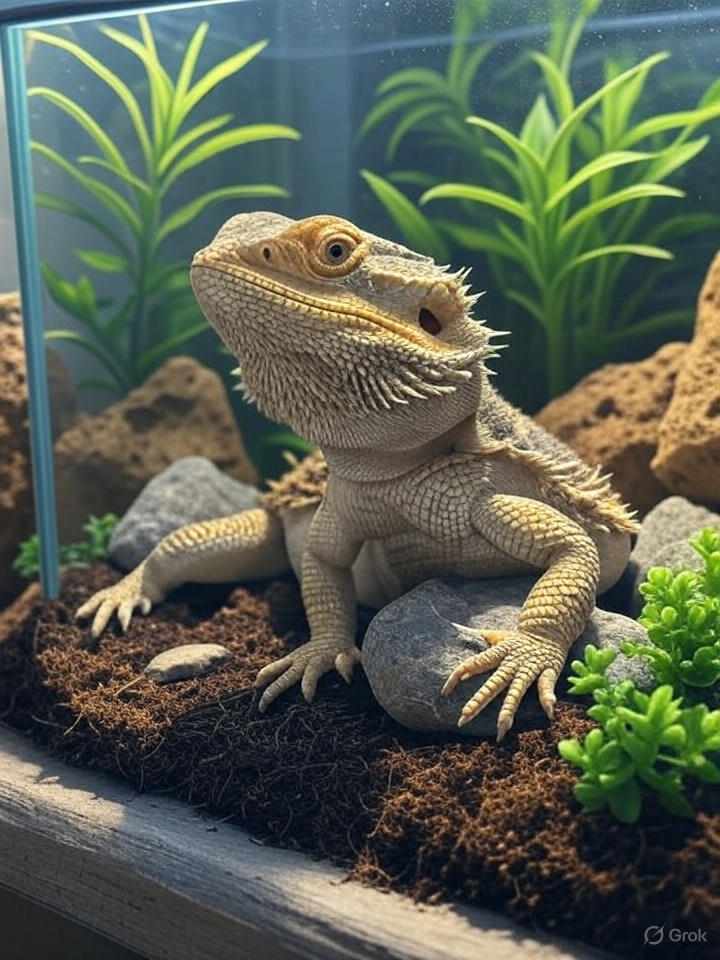
Bearded dragons, with their captivating charm and desert heritage from Australia, offer a rewarding rescue experience, but acclimating a rescued bearded dragon poses unique challenges due to potential stress or neglect. Creating a safe, comfortable environment and building trust gradually are key to helping these lizards thrive. Whether you’re a first-time owner or an experienced enthusiast, this guide provides practical steps to ease their transition. Drawing from extensive reptile care expertise and veterinary insights, begin now to foster a strong bond with your new pet.
This article covers habitat setup, initial introduction, minimal handling, gentle techniques, stress reduction/trust-building, health/diet monitoring, and conclusion. Start today to support your dragon’s adjustment.
Disclosure: This post contains affiliate links. I may earn a small commission from purchases made through these links at no additional cost to you (#CommissionsEarned).
Setting Up the Perfect Habitat
Prepare a vivarium mimicking the Australian desert before your rescued bearded dragon arrives, using a 40-gallon minimum tank for adults with 95–100°F basking and 80–85°F cool zones, 10–12% UVB lighting for calcium, and 30–40% humidity, per PetMD (https://www.petmd.com/reptile/bearded-dragon-care-sheet). Stabilize conditions for a week, adding hides (caves, logs) and safe substrates (reptile carpet, tiles) to avoid impaction. Enhance your setup with habitat kits on Amazon (https://amzn.to/4lku8DG).
Introducing Your Dragon with Care
Minimize stress on day one by gently placing your rescued bearded dragon in the vivarium, offering live insects (20–100, age-dependent), greens (collard, mustard), and fresh water without handling, per RSPCA. Avoid hovering—allow exploration until the next day if stress signs (darkened beard, hiding) appear. Patience is vital for neglected dragons. Enhance your prep with feeding supplies on Amazon (https://amzn.to/4lku8DG).
Minimizing Handling for the First Week
Avoid handling for the first week to help your rescued bearded dragon decompress, focusing on consistent care, per a 2023 Journal of Exotic Pet Medicine study (https://doi.org/10.1016/j.jepm.2023.03.001). Feed daily with gut-loaded insects dusted with calcium and greens, removing uneaten insects after 10–15 minutes. Speak softly to familiarize them with your voice, avoiding sudden movements. Enhance your routine with calming aids on Amazon (https://amzn.to/4lku8DG).
Gentle Handling Techniques
After a week, introduce handling gradually, approaching from the side/under the chin, lifting with a palm-up grip supporting the body, per a 2022 Reptile Medicine and Surgery study (https://doi.org/10.1016/j.jepm.2022.01.005/). Start with 5–10-minute sessions, 2–3 times daily in a calm setting, stopping if stress (beard puffing) shows. Enhance your bonding with handling tools on Amazon (https://amzn.to/4lku8DG).
Reducing Stress and Building Trust
Reduce stress for your rescued bearded dragon with a partially covered tank (towel) to limit sensory overload, a worn unscented shirt for scent familiarity, and 85–92°F warm baths (20 minutes) to soothe, per a 2021 Journal of Applied Animal Welfare Science study (https://doi.org/10.1080/10888705.2021.1872023/). Speak softly and house separately from others. Trust may take weeks or a month for severely stressed dragons. Enhance your setup with bath tools on Amazon (https://amzn.to/4lku8DG).
Monitoring Health and Diet
Monitor health for your rescued bearded dragon, watching for stress (darkened beard, lethargy), appetite loss, or abnormal poop—offer 20–100 daily insects (age-based) and greens (kale, collard), avoiding pellets, per veterinary guidelines (https://arav.site-ym.com/page/ReptileCareResources/). Hydrate with misting or an eye dropper; consult a vet if issues persist. Enhance your care with health kits on Amazon (https://amzn.to/4lku8DG).
Conclusion: Ease Your Rescued Dragon’s Transition
Acclimating a rescued bearded dragon requires a safe habitat, minimal initial handling, gentle techniques, stress reduction, and health monitoring to build trust and ensure well-being. Ensure your dragon thrives with habitat kits, feeding supplies, calming aids, handling tools, bath tools, and health kits on Amazon (https://amzn.to/4lku8DG). Share your acclimation journey in the comments and consult a veterinarian for tailored advice to keep your beardie flourishing.
Today’s date and time is 06:32 PM PDT on Sunday, July 13, 2025.